विषय सूची
- शुरुआत: भारतीय डेयरी में कितना मौका है?
- पहले कदम: लाइसेंस, FSSAI, GST, पैसा
- गाय या भैंस — कौन सा फायदेमंद है?
- इन्फ्रास्ट्रक्चर: तबेला, सामान, ठंडा रखना
- ग्राहक: कैसे जोड़ें, कैसे टिकाएँ, रेट कैसे रखें
- दूध की क्वालिटी: FAT, SNF, मिलावट की पहचान
- हिसाब-किताब: रिकॉर्ड, GST, टैक्स
- 10 से 100+ ग्राहक तक कैसे पहुँचें
- टेक्नोलॉजी जो काम आती है
- आम मुश्किलें और उनका हल
- असली कहानियाँ — जिन्होंने किया
1. शुरुआत: भारतीय डेयरी में कितना मौका है? {#intro}
भारत दुनिया में सबसे ज़्यादा दूध बनाता है। हर साल 23 करोड़ टन से ज़्यादा — यानी दुनिया के कुल दूध का क़रीब एक-चौथाई हम अकेले देते हैं। डेयरी सेक्टर GDP में लगभग 5% हिस्सा है और 8 करोड़ से ज़्यादा परिवारों की रोज़ी-रोटी इसी से चलती है — ज़्यादातर छोटे किसान और मोहल्ले के दूधवाले।
अगर आप दूध का काम शुरू करने या बढ़ाने के बारे में सोच रहे हैं, तो सुनिए — यह उन चुनिंदा बिज़नेसों में से एक है जो सच में टिकाऊ हैं।
क्यों? कुछ सीधी बातें:
- रोज़ की कमाई: मौसम पर निर्भर नहीं। दूध हर घर में हर दिन चाहिए।
- ग्राहक टिकते हैं: एक संतुष्ट ग्राहक 5–10 साल तक एक ही दूधवाले से लेता है।
- बाज़ार खुला है: Amul, Mother Dairy जैसी बड़ी कंपनियाँ सिर्फ ~20% दूध बेचती हैं। बाकी 80% अभी भी स्थानीय दूधवाले और छोटी डेयरियाँ संभालती हैं — यानी जगह है, खूब जगह।
- क्वालिटी की माँग बढ़ रही है: शहरी ग्राहक ताज़ा, शुद्ध, घर पहुँचने वाले दूध के लिए ज़्यादा पैसे देने को तैयार हैं।
- सरकार भी साथ है: DEDS, KCC, MUDRA जैसी योजनाएँ पूंजी की ज़रूरत कम करती हैं।
बाज़ार की ज़रूरी जानकारी (2026):
| मेट्रिक | आँकड़ा |
|---|---|
| सालाना उत्पादन | 23 करोड़+ टन |
| प्रति व्यक्ति उपलब्धता | ~460 ग्राम/दिन |
| डेयरी सेक्टर की बढ़त | 5-6% CAGR |
| संगठित हिस्सा | ~20% |
| असंगठित / स्थानीय हिस्सा | ~80% |
| औसत घरेलू खपत | 1.2 लीटर/दिन |
| डेयरी सहकारी समितियाँ | 2,30,000+ |
बात साफ है: छोटे शहर से लेकर बड़े शहर के मोहल्ले तक — एक मेहनती दूधवाले के लिए हर जगह काम है।
और जानें: दूध डिलीवरी बिज़नेस कैसे शुरू करें — स्टेप-बाय-स्टेप पूरी गाइड।
2. पहले कदम: लाइसेंस, FSSAI, GST, पैसा {#getting-started}
पहली गाय खरीदने या किसान से दूध लेने से पहले — कानूनी और पैसों की नींव पक्की करनी होगी। बहुत से दूधवाले यह हिस्सा छोड़ देते हैं। फिर जुर्माना, छापे, ग्राहकों का अविश्वास — ये सब बाद में झेलते हैं। शुरू से सही करो, एक बार ही करना पड़ेगा।
2.1 FSSAI रजिस्ट्रेशन — यह ज़रूरी है
भारत में दूध का काम करना है तो FSSAI में रजिस्टर होना पड़ेगा, कोई भी हो। तीन तरह के रजिस्ट्रेशन हैं:
| सालाना कारोबार | लाइसेंस का टाइप | फीस | कितने साल |
|---|---|---|---|
| ₹12 लाख/साल तक | बेसिक रजिस्ट्रेशन | ₹100/साल | 1-5 साल |
| ₹12 लाख से ₹20 करोड़ | राज्य लाइसेंस | ₹2,000-5,000/साल | 1-5 साल |
| ₹20 करोड़ से ज़्यादा | केंद्रीय लाइसेंस | ₹7,500/साल | 1-5 साल |
छोटे दूधवालों को बस बेसिक रजिस्ट्रेशन चाहिए। foscos.fssai.gov.in पर ऑनलाइन हो जाता है। लगेगा: आधार, फोटो, पते का प्रमाण और बिज़नेस का नाम।
2.2 शॉप एंड एस्टेब्लिशमेंट / गुमस्ता
अगर आपके पास कोई जगह है — दुकान, कलेक्शन पॉइंट, स्टोरेज — तो उसे अपने राज्य के एक्ट में रजिस्टर करवाएँ। महाराष्ट्र में गुमस्ता, गुजरात में शॉप्स लाइसेंस। फीस ₹100 से ₹2,000 के बीच।
2.3 GST — हमेशा नहीं चाहिए
अच्छी खबर: ताज़े दूध पर GST नहीं लगता। सिर्फ ताज़ा दूध बेचते हो तो GST लेने की ज़रूरत नहीं। लेकिन लगेगा अगर:
- कारोबार ₹40 लाख से ऊपर जाए (कुछ राज्यों में ₹20 लाख)
- घी, पनीर, दही, लस्सी बेचो — इन पर 5% GST है
- होटल, रेस्टोरेंट को सप्लाई करो जो GST बिल माँगते हैं
- टेस्टिंग उपकरण, कैन वगैरह की खरीद पर Input Tax Credit चाहिए
पूरी जानकारी के लिए: डेयरी बिज़नेस GST गाइड।
2.4 उद्यम / MSME रजिस्ट्रेशन
udyamregistration.gov.in पर 10 मिनट में मुफ्त में होता है। फायदे:- ₹10 लाख तक बिना गारंटी बैंक लोन
- डेयरी कूलिंग उपकरण पर बिजली सब्सिडी
- सरकारी सप्लाई में प्राथमिकता
- ब्याज सहायता योजनाएँ
2.5 सच में कितना पैसा चाहिए?
यही सवाल सबसे पहले आता है। 2026 का असल हिसाब:
| स्तर | ग्राहक | एकमुश्त लागत | मासिक वर्किंग कैपिटल | अपेक्षित मासिक मुनाफा |
|---|---|---|---|---|
| माइक्रो | 10-25 | ₹25,000 | ₹15,000 | ₹8,000-12,000 |
| छोटा | 25-75 | ₹75,000 | ₹40,000 | ₹20,000-35,000 |
| मध्यम | 75-150 | ₹2,00,000 | ₹80,000 | ₹40,000-70,000 |
| बढ़ता हुआ | 150-300 | ₹5,00,000 | ₹1,80,000 | ₹75,000-1,40,000 |
| स्थापित | 300+ | ₹10,00,000+ | ₹4,00,000+ | ₹1,50,000+ |
ज़्यादातर नए दूधवालों के लिए माइक्रो या छोटे स्तर से शुरू करना सही रहता है। दिखावे के लिए ₹5 लाख उधार मत लो। 20 ग्राहकों से शुरू करो, खेल समझो, मुनाफा वापस लगाओ — 18-24 महीने में 200 तक पहुँच जाओगे।
3. गाय या भैंस — कौन सा फायदेमंद है? {#cows-vs-buffalo}
यह आपके बिज़नेस का सबसे अहम फैसला है। इससे आपका मार्जिन, ग्राहक का टाइप, सप्लाई की लागत और मौसमी रिस्क — सब तय होता है। यहाँ सीधा हिसाब है:
3.1 कीमत, उपज और लागत का तुलनात्मक जायज़ा
| फैक्टर | गाय | भैंस |
|---|---|---|
| थोक रेट | ₹35-45/L | ₹50-65/L |
| रिटेल रेट (होम डिलीवरी) | ₹55-70/L | ₹75-95/L |
| प्रति लीटर ग्रॉस मार्जिन | ₹18-25 | ₹22-30 |
| FAT | 3.5-4.5% | 6.5-8.0% |
| SNF | 8.0-8.8% | 9.0-10.0% |
| रोज़ाना उपज | 10-12 L | 8-10 L |
| चारे की लागत/दिन | ₹285-400 | ₹375-500 |
| प्रति लीटर उत्पादन लागत | ₹28-33 | ₹42-50 |
| दुग्धावधि | 280-300 दिन | 270-290 दिन |
3.2 कहाँ क्या चलता है?
- उत्तर भारत: भैंस का बोलबाला (65-75%)। मलाईदार दूध पसंद, प्रीमियम रेट मिलता है।
- दक्षिण भारत: गाय को तरजीह (60-70%)। फिल्टर कॉफी, दही, A2 का क्रेज़।
- पश्चिम भारत: मिलाजुला बाज़ार। गुजरात में घी/श्रीखंड के लिए भैंस, महाराष्ट्र के शहरी इलाकों में गाय।
- पूर्व भारत: गाय आगे (55-65%)। मिष्टी और रसगुल्ले के लिए परफेक्ट।
- मध्य भारत (MP, CG): भैंस थोड़ी आगे (55-60%), टियर-2 शहरों में गाय का चलन बढ़ रहा है।
3.3 क्या चुनें?
एक सीधा नियम: जहाँ जो बिकता है, वो दो — लड़ाई मत करो। अगर आपकी कॉलोनी भैंस का दूध पीती है, तो भैंस दो। पहले साल गाय के दूध के फायदे समझाने में मत लगे रहो — पैसा और वक्त दोनों जाएँगे।
ज़्यादातर नए दूधवालों के लिए सेफ शुरुआत: 60% भैंस + 40% गाय। इससे दोनों — सेहत वाले और पारंपरिक — ग्राहक कवर हो जाते हैं।
और जानें: गाय बनाम भैंस — दूध बिज़नेस में कौन सा फायदेमंद?
4. इन्फ्रास्ट्रक्चर: तबेला, सामान, ठंडा रखना {#infrastructure}
डेयरी बिज़नेस दो तरीकों से चल सकता है:
- सोर्सिंग मॉडल: किसानों से दूध खरीदो, ग्राहकों को पहुँचाओ। कम पूंजी, कम झंझट, पतला मार्जिन।
- फार्म मॉडल: खुद गाय-भैंस पालो। ज़्यादा पूंजी, ज़्यादा मुनाफा, ज़्यादा काम।
पहली बार शुरू करने वालों को सोर्सिंग मॉडल से शुरू करना चाहिए — जब तक 100+ ग्राहक और स्थिर कैश फ्लो न हो जाए।
4.1 सोर्सिंग मॉडल में क्या-क्या चाहिए
- कलेक्शन कैन: 4 x 10L एल्युमीनियम कैन (₹3,000-5,000)
- नापने का जग: साफ निशानों वाला 1L स्टेनलेस स्टील का जग
- डिजिटल वज़न मशीन: वज़न से डिलीवरी के लिए (₹1,500)
- FAT टेस्टिंग उपकरण: गर्बर सेंट्रीफ्यूज या इलेक्ट्रॉनिक मिल्क एनालाइज़र (₹8,000-25,000)
- वाहन: रूट के हिसाब से साइकिल / स्कूटी / ई-रिक्शा
- बेसिक स्टोरेज: शाम के राउंड के लिए आइस बॉक्स या छोटा चेस्ट फ्रीज़र (₹8,000-15,000)
4.2 फार्म मॉडल में क्या-क्या लगेगा
अगर खुद पशु पालने हैं, तो ठीक से बजट बनाओ:
| आइटम | लागत |
|---|---|
| ज़मीन (किराए पर) | ₹5,000-15,000/महीना |
| तबेला बनाना (10 पशु) | ₹2-4 लाख |
| पानी की व्यवस्था + नाली | ₹40,000-80,000 |
| चारा काटने की मशीन | ₹15,000-30,000 |
| दुधारू मशीन (ज़रूरत हो तो) | ₹40,000-1,20,000 |
| बल्क मिल्क कूलर (500L) | ₹1,50,000-2,50,000 |
| पहले बैच के पशु (6 HF गाय) | ₹3-4 लाख |
| शुरुआती चारा | ₹40,000 |
| कुल फार्म सेटअप | ₹9-13 लाख |
ज़्यादातर सफल फार्म मालिक 4-6 जानवरों से शुरू करते हैं, 2-3 साल मुनाफा वापस लगाते हैं और धीरे-धीरे 15-20 जानवरों तक पहुँचते हैं। पहले ही महीने में 10 जानवर मत खरीदो — अनुभव नहीं है तो संभाल नहीं पाओगे।
4.3 सफाई — यही सबसे ज़रूरी है
चाहे जो मॉडल हो, दूध तभी बिकेगा जब साफ होगा। ये बातें ज़रूर मानो:
- हर बार इस्तेमाल के बाद सभी कैन गर्म पानी और सोडे से धोएँ
- दूध को मिट्टी के तेल, पेट्रोल या कड़े रसायनों के पास मत रखो — दूध गंध सोख लेता है
- दुहाई के 2 घंटे के भीतर दूध को 10°C से नीचे ले आओ
- दुहाई से पहले थन साफ करो (फार्म मॉडल)
- सिर्फ फूड-ग्रेड एल्युमीनियम या स्टेनलेस स्टील — प्लास्टिक की बाल्टी कभी नहीं
5. ग्राहक: कैसे जोड़ें, कैसे टिकाएँ, रेट कैसे रखें {#customers}
आपके ग्राहक ही आपका बिज़नेस हैं। उनके बिना सबसे अच्छा दूध भी किसी काम का नहीं।
5.1 ग्राहक जोड़ने के तरीके
| तरीका | कितना कारगर | लागत |
|---|---|---|
| मुँह से मुँह रेफरल | बहुत ज़्यादा | मुफ्त |
| 2 दिन का मुफ्त ट्रायल | बहुत ज़्यादा | ₹100-200/ग्राहक |
| सोसाइटी WhatsApp ग्रुप | अच्छा | मुफ्त |
| लिफ्ट में पर्चे | ठीक-ठाक | ₹1-2/पर्चा |
| लोकल Facebook ग्रुप | ठीक-ठाक | मुफ्त |
| Google My Business | अच्छा (लंबे समय में) | मुफ्त |
| अखबार इन्सर्ट | कम | ₹1-3/घर |
दो सबसे असरदार हथियार: मुफ्त ट्रायल और रेफरल इनाम। हर नए ग्राहक को पहले 2 दिन मुफ्त दो। जो पड़ोसी को भेजे उसे ₹50 की छूट दो। यह जोड़ी ग्रोथ 10 गुना कर सकती है।
5.2 रेट का मनोविज्ञान
"जल्दी ग्राहक पाने के लिए" ₹5-10 सस्ता मत दो। ऐसे ग्राहक सस्ते की आदत में पड़ जाते हैं — जैसे ही कोई और सस्ता आया, चले जाएँगे। इसकी जगह:
- बाज़ार के बराबर या थोड़ा ज़्यादा रेट रखो (₹2-3/L प्रीमियम)
- क्वालिटी पर खड़े रहो: FAT टेस्टेड, शुद्ध, बिना मिलावट, पारदर्शी हिसाब
- 6 महीने बाद लॉयल ग्राहकों को डिस्काउंट दो (₹1-2/L कम)
- महीने के बीच में रेट मत बढ़ाओ — बदलाव से 10 दिन पहले SMS/WhatsApp से बताओ
5.3 ग्राहक टिकाने के 3 पक्के नियम
- कभी डिलीवरी न चूको। एक दिन की चूक भी भरोसा तोड़ती है। हमेशा एक बैकअप आदमी तैयार रखो।
- क्वालिटी एक जैसी रहे। दूध का सोर्स बदला या पानी मिलाया — एक हफ्ते में ग्राहक भाग जाएँगे। हर बैच FAT मीटर से जाँचो।
- हिसाब खुला रखो। हर महीने लाइन-बाय-लाइन डिटेल से बिल भेजो। जो दूधवाला सब दिखाता है उसे ग्राहक इज़्ज़त देते हैं।
6. दूध की क्वालिटी: FAT, SNF, मिलावट की पहचान {#quality}
क्वालिटी वह चीज़ है जो आपके हाथ में है और जो सीधे आपका काम बढ़ाती है।
6.1 FAT और SNF क्या होता है?
FAT (वसा): 100 मिली दूध में मौजूद दूध की चर्बी। ज़्यादा FAT = गाढ़ा, मलाईदार दूध।
SNF (ठोस नॉन-फैट): वसा और पानी को हटाने के बाद जो बचता है — प्रोटीन, लैक्टोज़, खनिज। ज़्यादा SNF = बेहतर स्वाद और पोषण।
टोटल सॉलिड्स (TS) = FAT + SNF। जब ग्राहक "घाड़ा दूध" कहता है — यही वो महसूस करता है।
| दूध का टाइप | न्यूनतम FAT | न्यूनतम SNF | आम रिटेल रेट |
|---|---|---|---|
| गाय (सामान्य) | 3.5% | 8.5% | ₹55-65/L |
| गाय (A2 प्रीमियम) | 4.0% | 8.8% | ₹80-150/L |
| भैंस (सामान्य) | 6.0% | 9.0% | ₹75-85/L |
| भैंस (प्रीमियम) | 7.0% | 9.0% | ₹85-100/L |
| टोंड मिल्क | 3.0% | 8.5% | ₹45-55/L |
और जानें: FAT और SNF से दूध का रेट कैसे निकालें
6.2 मिलावट की पहचान कैसे करें? (किसानों से सतर्क रहो)
जब किसान से दूध लो — हर बैच जाँचो। मिलावट होती है, यह सच है। ये आसान जाँचें करो:
- लैक्टोमीटर रीडिंग: गाय के लिए 26-32, भैंस के लिए 28-35 होनी चाहिए। कम हो = पानी मिला है।
- अल्कोहल टेस्ट: 2 मिली दूध + 2 मिली अल्कोहल मिलाओ। अगर फट जाए — दूध बासी है या एसिडिटी ज़्यादा।
- स्टार्च टेस्ट: 2 बूँद आयोडीन डालो। नीला रंग = स्टार्च मिला।
- डिटर्जेंट टेस्ट: 5 मिली दूध + 5 मिली पानी हिलाओ। झाग जमा रहे = डिटर्जेंट मिला।
- सिंथेटिक मिल्क: एक बूँद उँगलियों के बीच रगड़ो। साबुन जैसा लगे = नकली दूध।
और जानें: घर पर दूध की मिलावट कैसे जाँचें
7. हिसाब-किताब: रिकॉर्ड, GST, टैक्स {#finance}
₹40,000 और ₹1,00,000 कमाने वाले दूधवाले में फर्क अक्सर ग्राहकों की संख्या नहीं — हिसाब का अनुशासन होता है।
7.1 रोज़ ये रिकॉर्ड रखना ज़रूरी है
- दैनिक दूध खरीद (सप्लायर-वार): मात्रा, रेट, FAT, भुगतान
- दैनिक ग्राहक डिलीवरी: नाम, मात्रा, रेट, बिल राशि
- रोज़ का नकद हिसाब: शुरुआत, आमद, खर्च, बाकी
- मासिक सारांश: कुल बिक्री, कुल लागत, शुद्ध मुनाफा
7.2 हर महीने के अंत में यह करो
बिना चूके:
- ग्राहक-वार वसूली जोड़ो
- बकाया निकालो — कौन कितना बकाया है
- सभी ग्राहकों को WhatsApp बिल भेजो, देय तारीख के साथ
- सप्लायरों को पूरा भुगतान करो
- ग्रॉस प्रॉफिट: कुल बिक्री – कुल दूध खरीद
- नेट प्रॉफिट: ग्रॉस प्रॉफिट – ईंधन – रखरखाव – हेल्पर तनख्वाह – मोबाइल – अन्य
- नेट मुनाफे का 10% आपातकालीन रिज़र्व में अलग रखो
7.3 टैक्स — इतना ही जानना काफी है
अगर सालाना आमदनी ₹2.5 लाख से ज़्यादा है तो ITR भरना ज़रूरी है। दूधवालों के लिए सबसे आसान तरीका धारा 44AD है: टर्नओवर का 6-8% आय घोषित करो — विस्तृत खाते रखने की ज़रूरत नहीं।
उदाहरण: सालाना बिक्री ₹18 लाख है — ₹1.08 लाख (6%) मुनाफा घोषित करो। इस पर टैक्स ज़्यादातर शून्य निकलेगा क्योंकि यह छूट सीमा से नीचे है।
समय पर ITR भरते रहो। इसका रिकॉर्ड डेयरी लोन, MUDRA और सरकारी सब्सिडी में काम आता है।
8. 10 से 100+ ग्राहक तक कैसे पहुँचें {#scaling}
यहीं ज़्यादातर दूधवाले रुक जाते हैं। बढ़त की सीढ़ी:
चरण 1: 10-25 ग्राहक (पहले 3 महीने)
- एक भरोसेमंद किसान से दूध लो
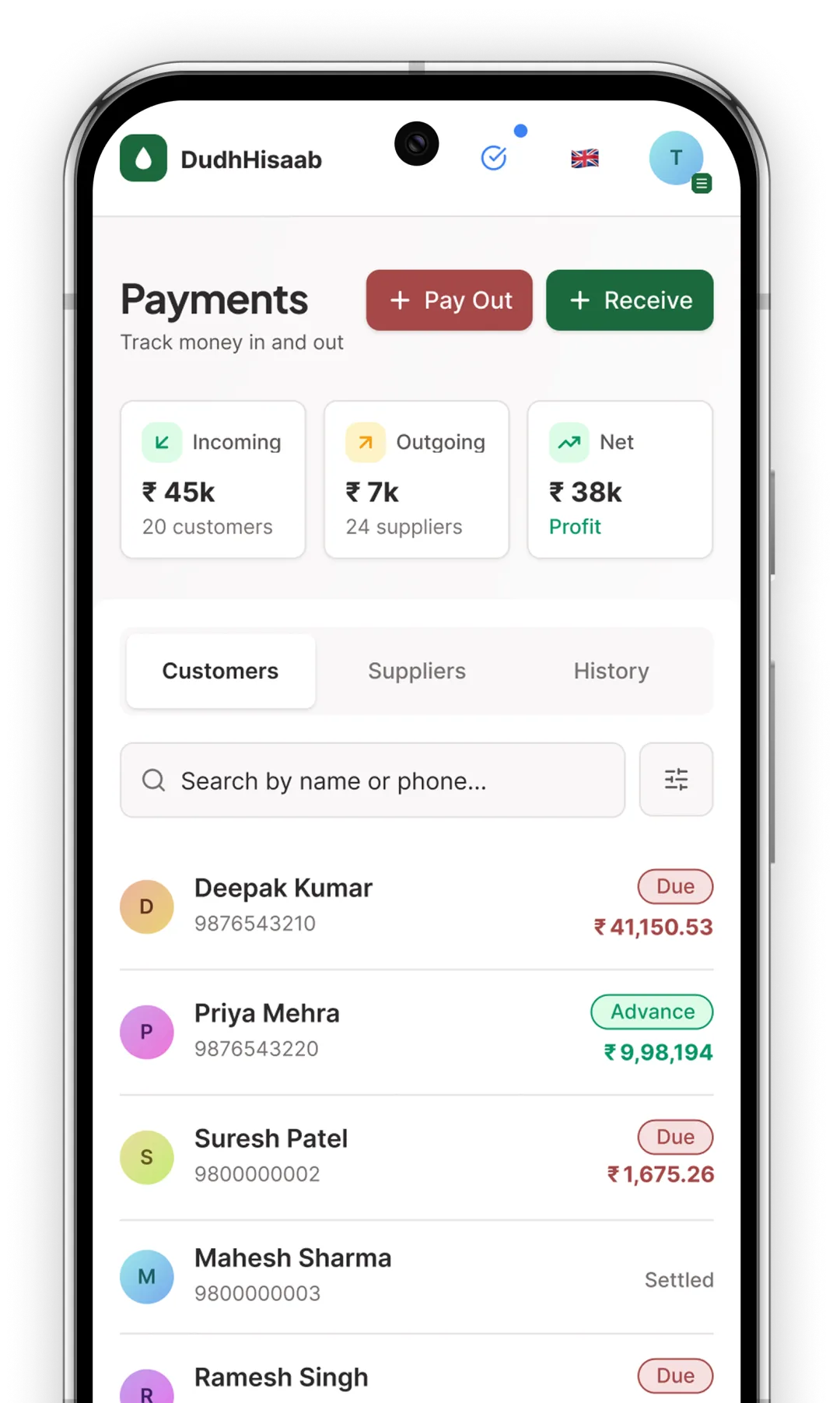
- नोटबुक या DudhHisaab App ऐप — जो आसान लगे
- हर हफ्ते हर ग्राहक से मिलो, फीडबैक लो
- 100% मुनाफा वापस सप्लाई में लगाओ
चरण 2: 25-75 ग्राहक (महीने 3-9)
- दूसरा दूध सोर्स जोड़ो — एक पर निर्भर मत रहो
- अगर नहीं है तो स्कूटी लो
- कागज़ से डिजिटल ऐप पर हमेशा के लिए स्विच करो
- रेट अपडेट के लिए WhatsApp ब्रॉडकास्ट शुरू करो
चरण 3: 75-150 ग्राहक (महीने 9-18)
- एक डिलीवरी हेल्पर रखो, रूट बाँटो
- एक सेकेंडरी प्रोडक्ट जोड़ो — पनीर या दही
- Google My Business लिस्टिंग खोलो
- शाम के स्टॉक के लिए छोटा चेस्ट फ्रीज़र लो
चरण 4: 150-300 ग्राहक (महीने 18-36)
- 2-3 डिलीवरी लोग रखो
- छोटा किराए का स्टोरेज या कलेक्शन पॉइंट लो
- 2-3 और प्रोडक्ट ऑफर करो
- सभी भुगतानों के लिए UPI चालू करो — नकदी वसूली का तनाव खत्म
चरण 5: 300+ ग्राहक (36 महीने के बाद)
- बल्क मिल्क कूलर पर सोचो
- पड़ोसी इलाके में अपना मॉडल फ्रैंचाइज़ करो
- NABARD सब्सिडी या डेयरी लोन के लिए अर्ज़ी दो
- ब्रांड बनाओ: प्रिंटेड कैन, यूनिफॉर्म, ID कार्ड
और जानें: 20 से 200 ग्राहकों तक दूध बिज़नेस कैसे बढ़ाएँ
9. टेक्नोलॉजी जो काम आती है {#technology}
दस साल पहले दूध का धंधा मतलब एक कागज़ी खाता और एक पेन। आज सफल दूधवाले वे हैं जो सरल, डेयरी-स्पेसिफिक टेक इस्तेमाल करते हैं।
2026 में एक गंभीर दूधवाले को कम से कम यह चाहिए:
- WhatsApp वाला स्मार्टफोन: रेट अपडेट, बिल, ग्राहक से बात के लिए
- डेयरी मैनेजमेंट ऐप: रोज़ की एंट्री, ऑटो-बिलिंग, पेमेंट रिमाइंडर के लिए DudhHisaab
- UPI / PhonePe / Google Pay: डिजिटल वसूली — झगड़े 90% कम होते हैं
- डिजिटल स्केल या इलेक्ट्रॉनिक मिल्क एनालाइज़र: एक जैसी मात्रा और क्वालिटी के लिए
- Google My Business: मुफ्त में ग्राहक आएँ — लोकल सर्च में दिखो
- बेसिक क्लाउड बैकअप (Google Drive): ग्राहक डेटा कभी न जाए
और जानें: डिजिटल खाता बनाम कागज़ी खाता — क्या फर्क पड़ता है?
10. आम मुश्किलें और उनका हल {#challenges}
मुश्किल 1: मानसून में सप्लाई रुकना
जुलाई-सितंबर में किसान चारे की कमी और बीमारी की वजह से सप्लाई घटा देते हैं। हल: 2-3 बैकअप किसानों से पूरे साल संबंध रखो — सिर्फ मुश्किल के वक्त नहीं।
मुश्किल 2: ग्राहक का पैसा देर से मिलना
लगभग 40% दूधवालों का 20% मासिक बिल "कल दे दूँगा" में फँसा रहता है। हल: WhatsApp पर डिजिटल मासिक बिल + देय तारीख से 2 दिन पहले अपने आप रिमाइंडर। इससे वसूली का समय 15 दिन से 5 दिन हो जाता है।
मुश्किल 3: क्वालिटी पर शिकायत
"कल का दूध पतला था" — सबसे आम शिकायत। हल: दूध आने के दिन हर बैच का FAT रिकॉर्ड करो। शिकायत हो तो ग्राहक को डेटा दिखाओ। पारदर्शिता शिकायतें बंद करती है।
मुश्किल 4: डिलीवरी आदमी का अचानक जाना
बिना बताए छोड़ जाना बड़ा रिस्क है। हल: 1 एक्स्ट्रा आदमी रखो, बाज़ार से 5% ज़्यादा तनख्वाह दो, दिवाली-होली पर बोनस दो और दो लोगों को आपका पूरा रूट सिखाओ।
और जानें: ग्राहक की शिकायत कैसे संभालें और मानसून में डेयरी बिज़नेस की चुनौतियाँ
11. असली कहानियाँ — जिन्होंने किया {#stories}
केस 1: रमेश यादव, इंदौर — 2 साल में 85 से 320 ग्राहक
रमेश ने 2024 में 85 ग्राहकों और कागज़ी खाते से शुरू किया। हर महीने 3 दिन पैसे माँगने और बिल दोबारा गिनने में जाते थे। 2025 के बीच में DudhHisaab अपनाया, WhatsApp बिल अपने आप जाने लगे और हर महीने 40+ घंटे बचने लगे। वो वक्त उसने एक सरल रेफरल सिस्टम में लगाया — 18 महीनों में 235 नए ग्राहक जुड़ गए। मासिक शुद्ध मुनाफा ₹38,000 से ₹1,45,000 हो गया।
केस 2: सुनीता बेन, आनंद — एक भैंस से डेयरी कलेक्शन सेंटर तक
सुनीता ने 2022 में अपनी पारिवारिक ज़मीन पर एक भैंस से शुरू किया। 2024 तक 12 जानवर हो गए और 30 पड़ोस के किसानों से दूध खरीद कर माइक्रो कलेक्शन पॉइंट बना लिया। अब आनंद में उनकी डेयरी 180 घर और 4 मिठाई की दुकानों को सप्लाई करती है। उनका तरीका: किसानों को उचित FAT-आधारित रेट, जिससे रेट बढ़ने पर भी सप्लायर नहीं गए।
केस 3: विक्रम पाटिल, पुणे — प्रीमियम A2 ब्रांड
विक्रम ने 2023 में "पाटिल डेयरी" शुरू की — A2 गाय का दूध ₹120/L पर, सेहत के प्रति सजग शहरी ग्राहकों के लिए। सिर्फ 110 ग्राहक हैं लेकिन मासिक टर्नओवर ₹4.5 लाख और नेट मार्जिन 35% — किसी भी वॉल्यूम-फोकस्ड दूधवाले से बेहतर। उनका राज़: WhatsApp पर हर गाय की फोटो और हर हफ्ते ग्राहकों के लिए फार्म विज़िट।
12. सरकारी योजनाएँ और आर्थिक मदद
ज़्यादातर दूधवालों को पता नहीं कि सरकार डेयरी सेक्टर के लिए कितना पैसा और सस्ता कर्ज़ दे रही है। हर गंभीर डेयरी मालिक को ये योजनाएँ देखनी चाहिए:
डेयरी एंटरप्रेन्योरशिप डेवलपमेंट स्कीम (DEDS)
NABARD चलाता है। डेयरी यूनिट की सेटअप लागत पर 25% (SC/ST/महिलाओं के लिए 33%) तक पिछली कैपिटल सब्सिडी। आमतौर पर फंड होने वाली चीज़ें: 2-10 गाय माइक्रो डेयरी, बल्क मिल्क कूलिंग यूनिट, दूध प्रसंस्करण यूनिट, कोल्ड चेन उपकरण। नज़दीकी बैंक से अर्ज़ी दो।
किसान क्रेडिट कार्ड (KCC) डेयरी के लिए
2019 से KCC डेयरी किसानों के लिए भी खुला है। 4% ब्याज पर वर्किंग कैपिटल लोन (समय पर चुकाने पर और भी कम)। एक महीने का चारा, नई बछिया या बैकअप स्कूटी के लिए बढ़िया।
MUDRA लोन (शिशु / किशोर / तरुण)
- शिशु: ₹50,000 तक — माइक्रो दूधवालों के लिए
- किशोर: ₹50,000 से ₹5 लाख — ऑपरेशन बढ़ाने के लिए
- तरुण: ₹5 लाख से ₹10 लाख — बड़े विस्तार के लिए
एनिमल हसबेंड्री इन्फ्रास्ट्रक्चर डेवलपमेंट फंड (AHIDF)
डेयरी प्रसंस्करण, वैल्यू एडिशन और फीड इन्फ्रास्ट्रक्चर के लिए ₹15,000 करोड़। सरकार से 3% ब्याज सब्वेंशन — यानी असल लोन रेट 4-6%। 100+ ग्राहकों वाले जो दही, पनीर या घी प्रोसेस करना चाहते हैं उनके लिए।
राज्य की अपनी योजनाएँ
मध्य प्रदेश, राजस्थान, गुजरात, महाराष्ट्र, कर्नाटक, पंजाब, हरियाणा — कई राज्य दुधारू मशीन, चारा कटाई मशीन, पशु खरीद और तबेला बनाने पर सब्सिडी देते हैं। साल में एक बार अपने ज़िले के पशुपालन कार्यालय ज़रूर जाओ — अभी क्या चल रहा है, यह जानने का यही तरीका है।
बीमा की बात
- पशु बीमा: जानवर की कीमत का लगभग 2-3% प्रीमियम। ₹60,000 की HF गाय के लिए — ₹1,500-1,800/साल। डेयरी लोन लेने पर यह अनिवार्य है।
- व्यक्तिगत दुर्घटना बीमा: दूधवाले अजीब वक्त पर सड़क पर होते हैं। ₹10 लाख का कवर सिर्फ ₹300-500/साल में। कुछ गलत हो तो परिवार बच जाता है।
13. पर्यावरण और पशु की देखभाल
भारत के डेयरी ग्राहक अब यह भी जानना चाहते हैं कि दूध कैसे बनता है। नैतिक तरीके अपनाना सही काम है और एक मार्केटिंग फायदा भी।
- 24x7 साफ पानी: प्यासी गाय पतला दूध देती है
- छाया और हवा: गर्मी में तनावग्रस्त गाय की उपज 15-20% तक गिर जाती है
- ऑक्सीटोसिन इंजेक्शन बिल्कुल नहीं: गैरकानूनी है, जानवर की सेहत बर्बाद करता है — जो करता है वो लंबे समय तक टिक नहीं सकता
- गोबर का सही इस्तेमाल: यह सोना है। कम्पोस्ट बनाओ या फ्यूल केक / वर्मीकम्पोस्ट बेचो
- इज़्ज़त से पेश आओ: दुहाई से पहले बछड़े को दूध पिलाओ, बेरहमी से मत हटाओ
शहरी ग्राहक अब पूछते हैं — "आपका फार्म कहाँ है?" हर साल 2-3 ग्राहकों को फार्म पर बुलाओ। यह भरोसा किसी मार्केटिंग बजट से नहीं आता।
आखिरी बात
दूध का धंधा ग्लैमरस नहीं है। सुबह 4 बजे उठना पड़ेगा, हाथों में सालों तक दूध की गंध रहेगी और पहला साल आपका धैर्य परखेगा। लेकिन इतनी स्थिर माँग, बार-बार होने वाली कमाई और असली विकास की जगह कम बिज़नेसों में होती है। पहले दिन से इसे असली बिज़नेस की तरह चलाओ — लाइसेंस लो, डिजिटल हिसाब रखो, सही रेट लो, क्वालिटी बनाए रखो और ग्राहकों का सम्मान करो।
अगले दशक में वे दूधवाले जीतेंगे जो पुरानी इज़्ज़त — क्वालिटी और रिश्तों की को नए ज़माने के टूल्स — स्केल और कुशलता के के साथ जोड़ेंगे। जो टेक्नोलॉजी से मुँह फेरेंगे, साफ रिकॉर्ड नहीं रखेंगे या ग्राहकों के साथ पेशेवर नहीं रहेंगे — वे धीरे-धीरे बाज़ार खोते जाएँगे।
क्या आप तैयार हैं? DudhHisaab मुफ्त डाउनलोड करें और ग्राहक, रोज़ की एंट्री, FAT-आधारित रेट और मासिक बिल — सब एक ऐप में मैनेज करें। खासतौर पर भारतीय दूधवालों के लिए, हिंदी + अंग्रेज़ी में।