
Why Start a Milk Delivery Business in India?
India is the world's largest milk producer, with over 230 million tonnes of milk produced annually. The demand for fresh, doorstep milk delivery continues to grow — especially in tier-2 and tier-3 cities where packaged milk brands haven't fully penetrated. For anyone looking to start their own business with moderate investment, a doodh delivery ka kaam (milk delivery business) is one of the most reliable options.
Unlike many businesses that see seasonal ups and downs, milk is a daily essential. Every household needs it — for chai, dahi, paneer, kheer, and more. This means consistent, recurring revenue from day one.
Step 1: Understand the Market
Before you invest a single rupee, spend a week understanding your local market:
- Identify your area: Which colony, mohalla, or society will you serve? Count the number of households. A good starting area has 200-500 households within a 3-4 km radius.
- Check existing supply: Are there other doodhwalas or milk brands delivering here? What rates are they charging? What complaints do customers have?
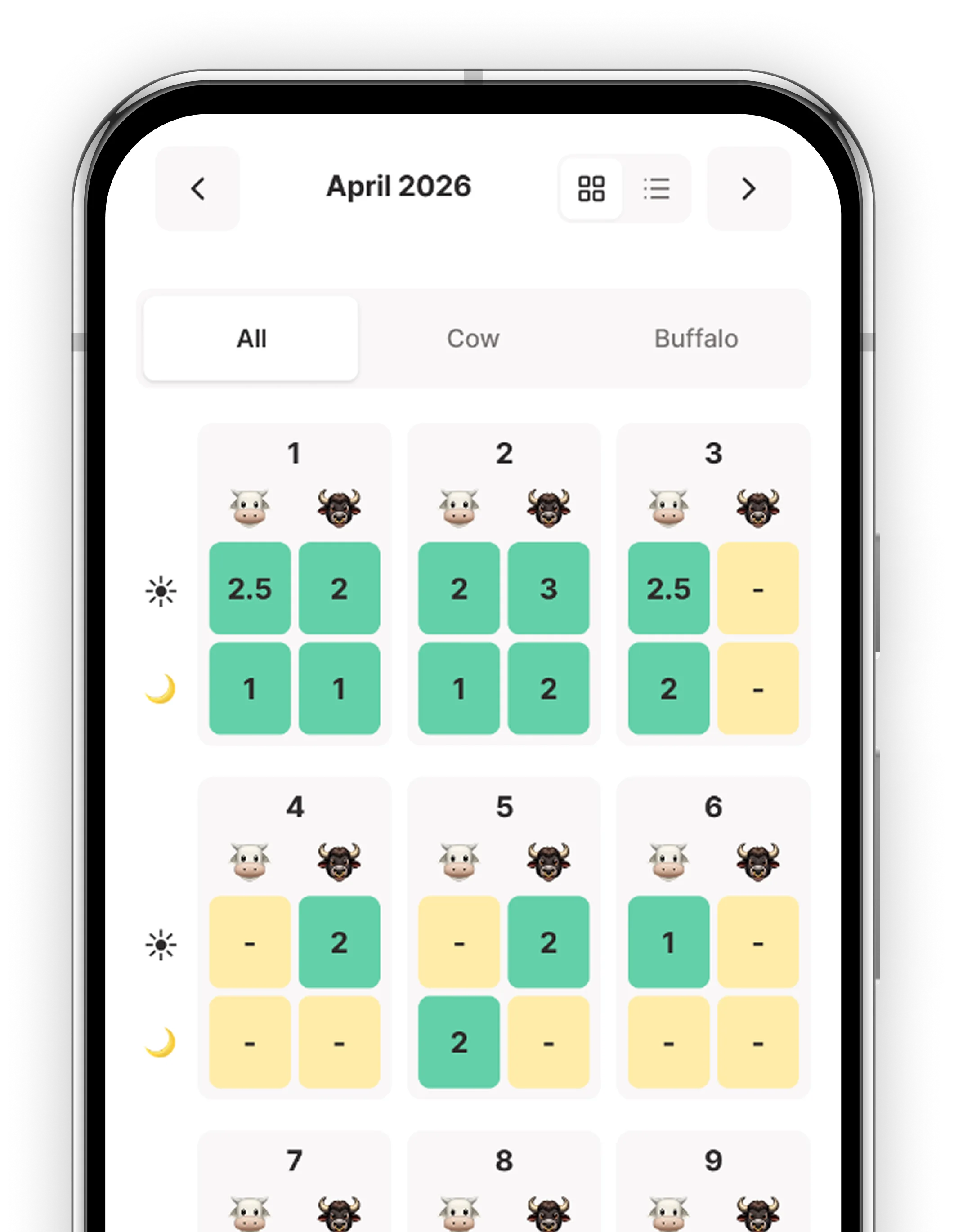
- Talk to potential customers: Ask 20-30 families what they pay, how much milk they need daily, and whether they'd switch to a new supplier. Most families consume 1-2 litres of gaay ka doodh (cow milk) or bhains ka doodh (buffalo milk) daily.
- Understand preferences: In North India, buffalo milk is preferred for its richness. In South and West India, cow milk is more popular. Your area may have specific preferences.
Step 2: Source Your Milk Supply
This is the most critical decision. You have several options:
Option A: Buy from Local Dairy Farmers
Visit nearby villages and gaushaalas. Negotiate a fixed rate per litre. Typical wholesale rates in 2026:
- Gaay ka doodh (cow milk): ₹35-45 per litre wholesale
- Bhains ka doodh (buffalo milk): ₹50-65 per litre wholesale
Advantages: Freshest milk, direct relationship, better margins.
Challenges: Quality consistency, need to test FAT regularly, seasonal supply variation.
Option B: Buy from a Milk Collection Centre
Many dairy cooperatives and private dairies sell bulk milk. The rate is usually based on FAT content (more on this in our FAT-SNF calculation guide).
Option C: Become a Franchise/Distributor
Brands like Amul, Mother Dairy, Parag, and local cooperatives offer distributor models. Lower margins but zero sourcing headaches.
Our recommendation: Start with Option A or B for better margins. As your business grows, diversify your suppliers to ensure consistent supply even during lean seasons.
Step 3: Calculate Your Investment
Here's a realistic breakdown for starting a milk delivery business in a mid-sized Indian city:
| Item | One-time Cost | Monthly Cost |
|---|---|---|
| Milk cans (10L x 4, 20L x 2) | ₹3,000-5,000 | — |
| Measuring equipment | ₹1,000-2,000 | — |
| Bicycle/Scooty/E-rickshaw | ₹15,000-80,000 | ₹2,000 (fuel) |
| FAT testing equipment | ₹2,000-5,000 | — |
| Initial milk purchase (working capital) | ₹10,000-20,000 | Recurring |
| Phone + SIM for WhatsApp | ₹8,000-12,000 | ₹300 |
| Dairy management app (Dudh Hisaab) | Free | Free |
| Total to start | ₹40,000-1,20,000 | ₹2,300+ |
You can start with as little as ₹40,000 if you already have a two-wheeler and start small.
Step 4: Set Your Pricing
Your retail price should cover:
- Milk purchase cost
- Transportation and fuel
- Your time and labour
- Spillage/wastage (typically 2-3%)
- Profit margin (aim for 20-30%)
Example: If you buy cow milk at ₹40/litre and sell at ₹55/litre, your gross margin is ₹15/litre. Delivering 100 litres daily = ₹1,500/day gross profit = ₹45,000/month before expenses.
Most successful doodhwalas in cities earn ₹30,000-80,000/month net profit depending on their volume and area.
Step 5: Plan Your Route and Schedule
Milk delivery is an early morning business. Plan your day:
- 4:00 AM: Collect milk from supplier/farmer
- 5:00-5:30 AM: Reach your delivery area
- 5:30-8:00 AM: Complete all deliveries
- Evening (optional): Second delivery round for some customers
Plan your route to minimize travel time. Group nearby customers together. A well-planned route of 50-80 customers can be completed in 2-2.5 hours.
Step 6: Manage Your Hisaab (Accounts)
This is where most milkmen struggle. When you have 50+ customers, tracking daily deliveries, varying quantities, different rates, and monthly payments becomes a nightmare with paper khatas (registers).
Common problems with paper-based hisaab:
- Pages get wet or torn
- Calculation mistakes in monthly totals
- Disputes with customers over quantities
- No record of payment history
- Can't generate bills or receipts
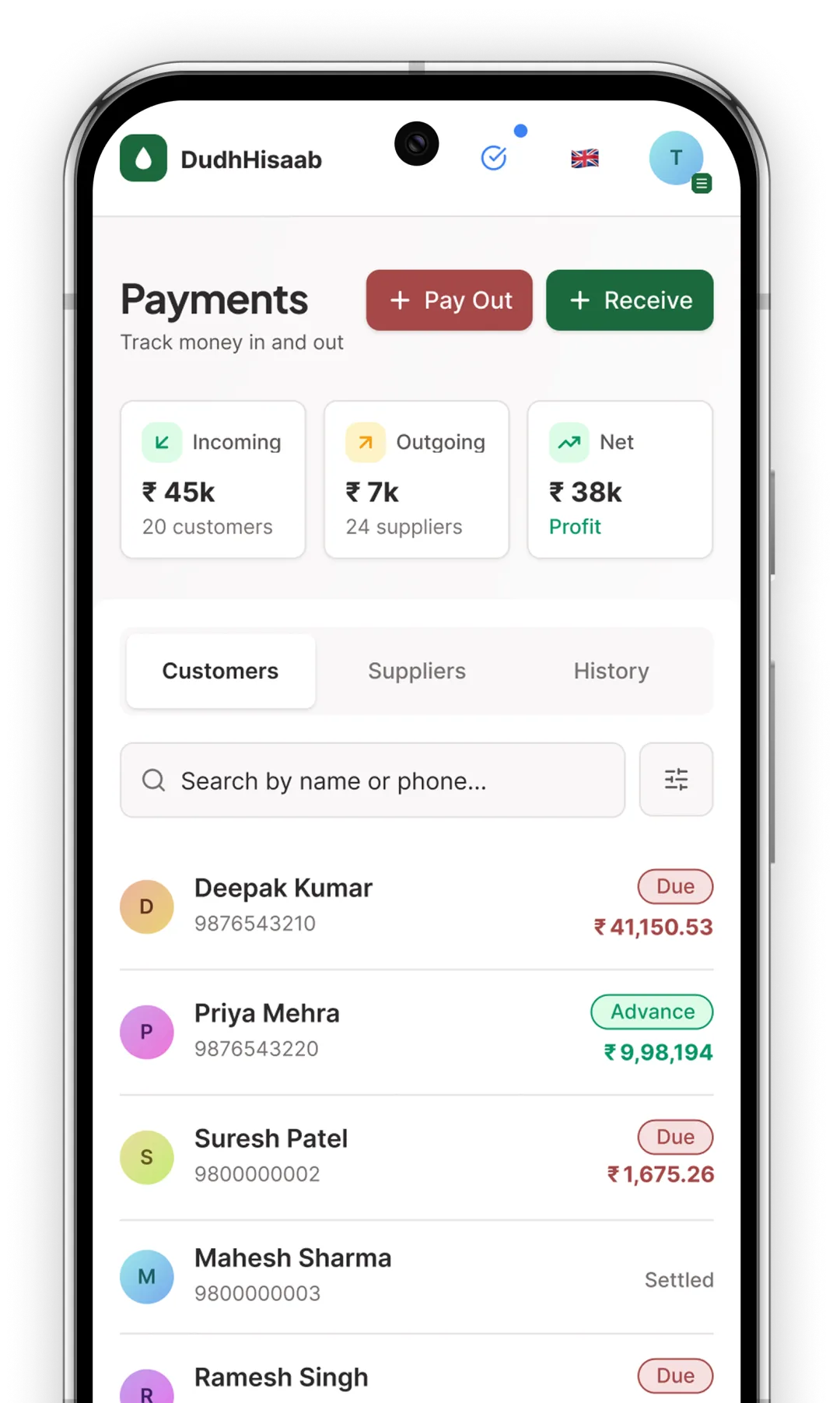
This is exactly why we built Dudh Hisaab — a free app specifically for Indian milkmen. Record daily entries in seconds, auto-calculate monthly bills, send payment reminders via WhatsApp, and never lose a record again.
Step 7: Grow Your Business
Once you've established a base of 50-100 regular customers:
- Add products: Paneer, dahi, ghee, chaach — higher margins, same customers
- Hire a helper: Train someone to handle a second route
- Build relationships: Festival gifts, consistent quality, and prompt problem resolution create lifelong customers
- Track everything: Use your Dudh Hisaab app to understand which customers are most profitable, which areas have growth potential, and where you're losing money
Licences You May Need
- FSSAI Licence: Required for any food business. Basic registration costs ₹100 and is valid for 1-5 years. Apply at fssai.gov.in.
- Shop & Establishment Act: Register with your local municipal body.
- GST Registration: Not required if annual turnover is below ₹40 lakhs (₹20 lakhs for some states). Fresh milk is GST-exempt, but processed dairy products attract 5% GST.
Key Takeaways
Starting a milk delivery business in India requires moderate investment, hard work, and reliable supply. The key advantages are daily recurring revenue, ever-growing demand, and the ability to start small and scale gradually. Manage your hisaab digitally from day one — it will save you hours every month and prevent payment disputes.
Ready to start? Download Dudh Hisaab for free and set up your dairy business in minutes.