दूध डिलीवरी का बिज़नेस क्यों करें?
भारत दुनिया का सबसे बड़ा दूध उत्पादक देश है — हर साल 230 मिलियन टन से ज़्यादा। और घर तक ताज़ा दूध पहुँचाने की माँग रुक नहीं रही, खासकर टियर-2 और टियर-3 शहरों में जहाँ बड़े पैकेज्ड मिल्क ब्रांड अभी पूरी तरह नहीं पहुँचे।
सबसे अच्छी बात? दूध में सीज़नल उतार-चढ़ाव नहीं होता जैसे बाकी बिज़नेस में होता है। हर घर को रोज़ दूध चाहिए — चाय, दही, पनीर, खीर — सब के लिए। यानी पहले दिन से ही नियमित कमाई।
स्टेप 1: पहले बाज़ार को समझें
एक रुपया लगाने से पहले एक हफ्ता लगाएँ — बस घूमें और देखें:
- इलाका तय करें: कौन सी कॉलोनी, मोहल्ला या सोसाइटी में जाएँगे? घर गिनें। 3-4 किमी के दायरे में 200-500 घर हों तो बढ़िया इलाका है।
- मौजूदा हाल देखें: पहले से कोई दूधवाला आ रहा है क्या? उनका रेट क्या है? लोगों की क्या शिकायत है उनसे?
- सीधे लोगों से पूछें: 20-30 घरों में जाएँ। पूछें — कितना दूध लेते हैं, कितना पैसा देते हैं, नया सप्लायर मिले तो बदलेंगे? ज़्यादातर परिवार रोज़ 1-2 लीटर गाय या भैंस का दूध लेते हैं।
- पसंद जानें: उत्तर भारत में भैंस का दूध ज़्यादा चलता है, गाढ़ा होता है। दक्षिण और पश्चिम भारत में गाय का दूध। आपके इलाके की अपनी पसंद होगी।
स्टेप 2: दूध की सप्लाई का जुगाड़ करें
यह सबसे बड़ा फैसला है। तीन रास्ते हैं:
विकल्प A: सीधे किसान से खरीदें
नज़दीकी गाँव या गौशाला में जाएँ। प्रति लीटर रेट तय करें। 2026 के थोक रेट कुछ ऐसे हैं:
- गाय का दूध: ₹35-45 प्रति लीटर थोक
- भैंस का दूध: ₹50-65 प्रति लीटर थोक
फायदा: सबसे ताज़ा दूध, सीधा रिश्ता, अच्छा मार्जिन।
दिक्कत: क्वालिटी एक जैसी रखनी पड़ती है, FAT टेस्ट करते रहें, मौसम में सप्लाई घट-बढ़ सकती है।
विकल्प B: मिल्क कलेक्शन सेंटर से खरीदें
डेयरी कोऑपरेटिव और प्राइवेट डेयरी बल्क में देती हैं। रेट FAT कंटेंट पर होता है — ज़्यादा समझना हो तो हमारी FAT-SNF कैलकुलेशन गाइड पढ़ें।
विकल्प C: डिस्ट्रीब्यूटर बनें
Amul, मदर डेयरी, पराग या लोकल कोऑपरेटिव के डिस्ट्रीब्यूटर बनें। मार्जिन कम होगा लेकिन सोर्सिंग की झंझट नहीं।
हमारी राय: शुरुआत में विकल्प A या B से करें — मार्जिन बेहतर होता है। जैसे-जैसे धंधा बढ़े, सप्लायर बढ़ाएँ ताकि कम सीज़न में भी सप्लाई न रुके।
स्टेप 3: कितना लगेगा — असली हिसाब
एक मिड-साइज़ शहर में शुरू करने का खर्च कुछ ऐसा होता है:
| सामान | एकबार का खर्च | मासिक खर्च |
|---|---|---|
| मिल्क कैन (10L x 4, 20L x 2) | ₹3,000-5,000 | — |
| माप उपकरण | ₹1,000-2,000 | — |
| साइकिल/स्कूटी/ई-रिक्शा | ₹15,000-80,000 | ₹2,000 (ईंधन) |
| FAT टेस्टिंग उपकरण | ₹2,000-5,000 | — |
| शुरुआती दूध खरीद (वर्किंग कैपिटल) | ₹10,000-20,000 | बार-बार |
| फोन + WhatsApp के लिए SIM | ₹8,000-12,000 | ₹300 |
| डेयरी मैनेजमेंट ऐप (Dudh Hisaab) | मुफ़्त | मुफ़्त |
| कुल शुरुआती खर्च | ₹40,000-1,20,000 | ₹2,300+ |
अगर दोपहिया पहले से है और छोटे से शुरू करते हैं — ₹40,000 में भी हो जाता है।
स्टेप 4: रेट कैसे तय करें
रेट ऐसा रखें जो ये सब कवर करे:
- दूध खरीद की लागत
- ट्रांसपोर्ट और ईंधन
- आपका समय और मेहनत
- छलकाव या बर्बादी (2-3% मानकर चलें)
- मुनाफा (20-30% टारगेट करें)
मिसाल के तौर पर: गाय का दूध ₹40/लीटर में खरीदा, ₹55/लीटर में बेचा — मार्जिन ₹15/लीटर। रोज़ 100 लीटर डिलीवरी करें तो ₹1,500/दिन ग्रॉस प्रॉफिट — यानी खर्च से पहले ₹45,000/महीना।
शहरों में जो दूधवाले ठीक से चला रहे हैं, वो वॉल्यूम और इलाके के हिसाब से ₹30,000-80,000/महीना नेट कमाते हैं।
स्टेप 5: रूट और टाइमिंग प्लान करें
दूध का काम सुबह का है। दिन ऐसे बनता है:
- सुबह 4:00 बजे: सप्लायर/किसान से दूध लें
- सुबह 5:00-5:30 बजे: डिलीवरी इलाके में पहुँचें
- सुबह 5:30-8:00 बजे: सारी डिलीवरी निपटाएँ
- शाम (ज़रूरत हो तो): कुछ ग्राहकों के लिए दूसरा राउंड
पास-पास के ग्राहकों को एक साथ रखें — रूट सोच-समझकर बनाएँ। 50-80 ग्राहकों का अच्छा रूट 2 से 2.5 घंटे में पूरा हो जाता है।
स्टेप 6: हिसाब का तरीका सुधारें
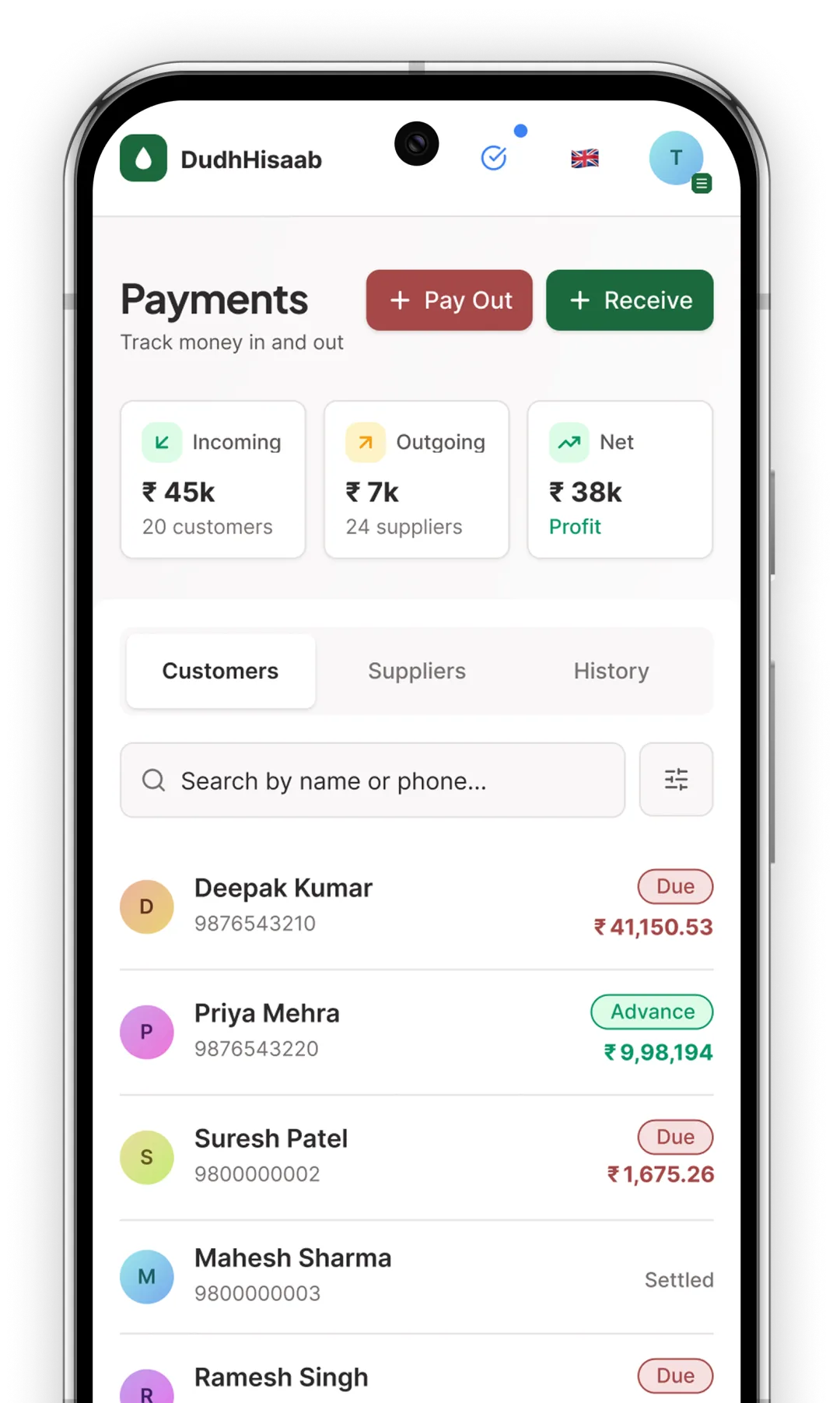
यहीं पर अधिकतर दूधवाले फँस जाते हैं। 50+ ग्राहक हो जाएँ तो रोज़ की डिलीवरी, अलग-अलग मात्रा, अलग रेट, और महीने का हिसाब — कागज़ी खाते में रखना नाइटमेयर बन जाता है।
कागज़ की आम दिक्कतें:
- पन्ने भीग जाते हैं या फट जाते हैं
- महीने का टोटल निकालते वक्त गलती होती है
- ग्राहक से मात्रा को लेकर बहस होती है
- पेमेंट हिस्ट्री का कोई रिकॉर्ड नहीं
- बिल या रसीद देना मुश्किल
इसीलिए हमने Dudh Hisaab बनाया — भारतीय दूधवालों के लिए एक मुफ्त ऐप। सेकेंडों में रोज़ की एंट्री करें, महीने का बिल खुद बनेगा, WhatsApp से रिमाइंडर भेजें — कोई रिकॉर्ड कभी नहीं खोएगा।
स्टेप 7: धंधा बढ़ाएँ
50-100 पक्के ग्राहक हो जाएँ, तो फिर:
- और चीज़ें जोड़ें: पनीर, दही, घी, छाछ — मार्जिन ज़्यादा, ग्राहक वही
- हेल्पर लगाएँ: किसी को ट्रेन करें जो दूसरा रूट सँभाले
- रिश्ता मज़बूत करें: त्योहार पर छोटी-सी भेंट, हमेशा अच्छी क्वालिटी, दिक्कत आए तो फटाफट हल — ये ग्राहक उम्रभर साथ देते हैं
- डेटा देखते रहें: Dudh Hisaab ऐप से पता चलेगा — कौन सा ग्राहक सबसे फायदेमंद है, कहाँ ग्रोथ हो सकती है, कहाँ नुकसान हो रहा है
कौन से लाइसेंस लगेंगे
- FSSAI लाइसेंस: किसी भी खाने-पीने के बिज़नेस के लिए ज़रूरी है। बेसिक रजिस्ट्रेशन ₹100 में होती है, 1-5 साल तक चलती है। fssai.gov.in पर जाकर अप्लाई करें।
- शॉप एंड एस्टैब्लिशमेंट एक्ट: अपनी नगर पालिका में रजिस्टर करें।
- GST रजिस्ट्रेशन: सालाना टर्नओवर ₹40 लाख से कम हो (कुछ राज्यों में ₹20 लाख) तो ज़रूरी नहीं। ताज़ा दूध GST-मुक्त है, प्रोसेस्ड डेयरी प्रोडक्ट पर 5% GST लगता है।
बात करें तो
भारत में दूध डिलीवरी का बिज़नेस ऐसा है जो ज़मीन पर टिका है — रोज़ की कमाई, लगातार माँग, और छोटे से शुरू करके बड़ा बनाने की आज़ादी। बस एक काम पहले दिन से ही करें — हिसाब डिजिटल रखें। इससे हर महीने घंटों की बचत होगी और पेमेंट के झगड़े नहीं होंगे।
शुरू करने का मन बना लिया? Dudh Hisaab मुफ्त में डाउनलोड करें और कुछ मिनटों में अपना डेयरी बिज़नेस सेट करें।