
क्या दूध पर GST लगता है?
सबसे पहले यही जानना होता है, है ना? तो सुनिए, अच्छी खबर यह है: भारत में ताजा दूध — चाहे गाय का हो या भैंस का — GST से पूरी तरह मुक्त है। HSN Code 0401 में आता है, 0% GST। खुला बेचो या सादी पैकेजिंग में — कोई फर्क नहीं।
बस दिक्कत तब शुरू होती है जब आप दूध को प्रोसेस करके बेचना शुरू करते हैं। तो चलिए हर चीज़ अलग-अलग देखते हैं।
डेयरी उत्पादों पर GST दरें (2026)
| उत्पाद | HSN Code | GST दर | ध्यान रखें |
|---|---|---|---|
| ताजा दूध (गाय/भैंस) | 0401 | 0% (छूट) | खुला या बिना ब्रांड |
| पाश्चुरीकृत दूध | 0401 | 0% (छूट) | टोन्ड, डबल-टोन्ड भी |
| दही (बिना ब्रांड) | 0403 | 0% (छूट) | खुला या सादा पैक |
| दही (ब्रांडेड) | 0403 | 5% | बंद पैकेट, लेबल वाला |
| छाछ/मट्ठा (बिना ब्रांड) | 0403 | 0% (छूट) | खुला बेचें |
| लस्सी (ब्रांडेड) | 0403 | 5% | बंद पैकेट, लेबल वाला |
| पनीर (बिना ब्रांड) | 0406 | 0% (छूट) | खुला बेचें |
| पनीर (ब्रांडेड) | 0406 | 5% | बंद पैकेट, लेबल वाला |
| घी (बिना ब्रांड) | 0405 | 0% (छूट) | खुला बेचें |
| घी (ब्रांडेड) | 0405 | 12% | बंद पैकेट, लेबल वाला |
| मक्खन | 0405 | 12% | हर तरह का |
| चीज | 0406 | 12% | हर तरह का |
| कंडेंस्ड मिल्क | 0402 | 18% | मीठा किया हुआ |
| फ्लेवर्ड मिल्क | 2202 | 12% | पैकेज्ड फ्लेवर्ड ड्रिंक |
| मिल्क पाउडर | 0402 | 5% | स्किम्ड और होल दोनों |
| आइसक्रीम | 2105 | 18% | सब प्रकार |
| क्रीम | 0401 | 5% | ताजा क्रीम |
एक जरूरी बात — ब्रांडेड vs बिना ब्रांड
2022 में (2024 में अपडेट हुआ) GST काउंसिल ने यह साफ कर दिया: अगर आप बंद पैकेट में अपने नाम से दही, पनीर या घी बेच रहे हैं — भले ही ब्रांड रजिस्टर्ड न हो — तो GST लगेगा।
लेकिन अगर बर्तन या कैन से खुला बेच रहे हैं? तो अभी भी छूट है।
दूधवालों को GST रजिस्ट्रेशन कब चाहिए?
रजिस्ट्रेशन नहीं चाहिए अगर:
- सिर्फ ताजा दूध बेचते हैं, घर-घर डिलीवरी
- सालाना कमाई ₹40 लाख से कम (पहाड़ी राज्यों — उत्तराखंड, HP, J&K, NE — में ₹20 लाख की सीमा है)
- सब कुछ GST-मुक्त सामान ही बेचते हैं
रजिस्ट्रेशन जरूरी है अगर:
- ब्रांडेड या पैकेज्ड डेयरी प्रोडक्ट बेचते हैं और टर्नओवर सीमा पार हो गई
- दूसरे राज्य में सामान भेजते हैं — इसमें टर्नओवर कितना भी हो, रजिस्ट्रेशन लाज़मी है
- ऑनलाइन किसी प्लेटफॉर्म पर बेचते हैं
सच्चाई यह है: जो दूधवाले सिर्फ ताजा दूध घर पहुंचाते हैं, उनमें से ज़्यादातर को GST की जरूरत नहीं होती। लेकिन जैसे ही आपने ब्रांडेड पनीर, घी या फ्लेवर्ड लस्सी बेचनी शुरू की — टर्नओवर पर नजर रखें।
FSSAI लाइसेंस — यह हर किसी के लिए जरूरी है
GST भले न लगे, FSSAI रजिस्ट्रेशन तो करवाना ही होगा — दूध बेचने वाले हर शख्स के लिए अनिवार्य है:
| श्रेणी | सालाना टर्नओवर | फीस | वैधता |
|---|---|---|---|
| बेसिक रजिस्ट्रेशन | ₹12 लाख से कम | ₹100/साल | 1-5 साल |
| स्टेट लाइसेंस | ₹12 लाख - ₹20 करोड़ | ₹2,000-5,000/साल | 1-5 साल |
| सेंट्रल लाइसेंस | ₹20 करोड़ से ज़्यादा | ₹7,500/साल | 1-5 साल |
ज़्यादातर दूधवाले बेसिक रजिस्ट्रेशन में आते हैं — बस ₹100 सालाना। fssai.gov.in पर ऑनलाइन आवेदन करें। चाहिए होगा:
- आधार कार्ड
- पासपोर्ट साइज फोटो
- दुकान या डेयरी का पता प्रमाण
आयकर — GST नहीं तो क्या, यह तो लागू होता है
- खेती की आय — अपने मवेशियों से दूध निकाल कर बेचना — आमतौर पर आयकर से मुक्त होती है
- व्यावसायिक आय — दूध खरीदकर आगे बेचना — पर कर लगता है, अगर कुल आय ₹3 लाख (2026-27 का नया स्लैब) से ज़्यादा हो
- ज़्यादातर छोटे दूधवाले धारा 44AD की अनुमानित कराधान योजना में आते हैं — टर्नओवर का 8% मुनाफा मान लो (डिजिटल पेमेंट पर 6%), और उसी पर टैक्स भरो। लंबे-चौड़े हिसाब किताब की जरूरत नहीं।
एक उदाहरण देखें:
सालाना दूध बिक्री: ₹15 लाख
अनुमानित मुनाफा (डिजिटल पेमेंट, 6%): ₹90,000
टैक्स देना होगा: शून्य — क्योंकि ₹3 लाख की बेसिक छूट से कम है
इसीलिए डिजिटल पेमेंट लेना और उसे Dudh Hisaab में दर्ज करना आपके काम आता है — 6% बनाम 8% वाला फर्क असली पैसे बचाता है। और अगर कभी टैक्स वाले पूछें, तो साफ रिकॉर्ड तैयार है।
हिसाब का रिकॉर्ड रखना क्यों जरूरी है
GST भरो या न भरो, हिसाब-किताब सहेज कर रखना हमेशा फायदेमंद रहता है:
- रोज़ की डिलीवरी — किसको कितना दूध गया
- खरीद का हिसाब — कितना दूध खरीदा और किससे
- पेमेंट रिकॉर्ड — किसने कब और कितना दिया, किस तरीके से
- खर्चे — पेट्रोल, गाड़ी मरम्मत, बर्तन, मदद करने वालों की मजदूरी
कागज पर भी हो सकता है, लेकिन एक गलती और पूरा महीने का हिसाब गड़बड़। ग्राहक विवाद हो तो हजारों का नुकसान।
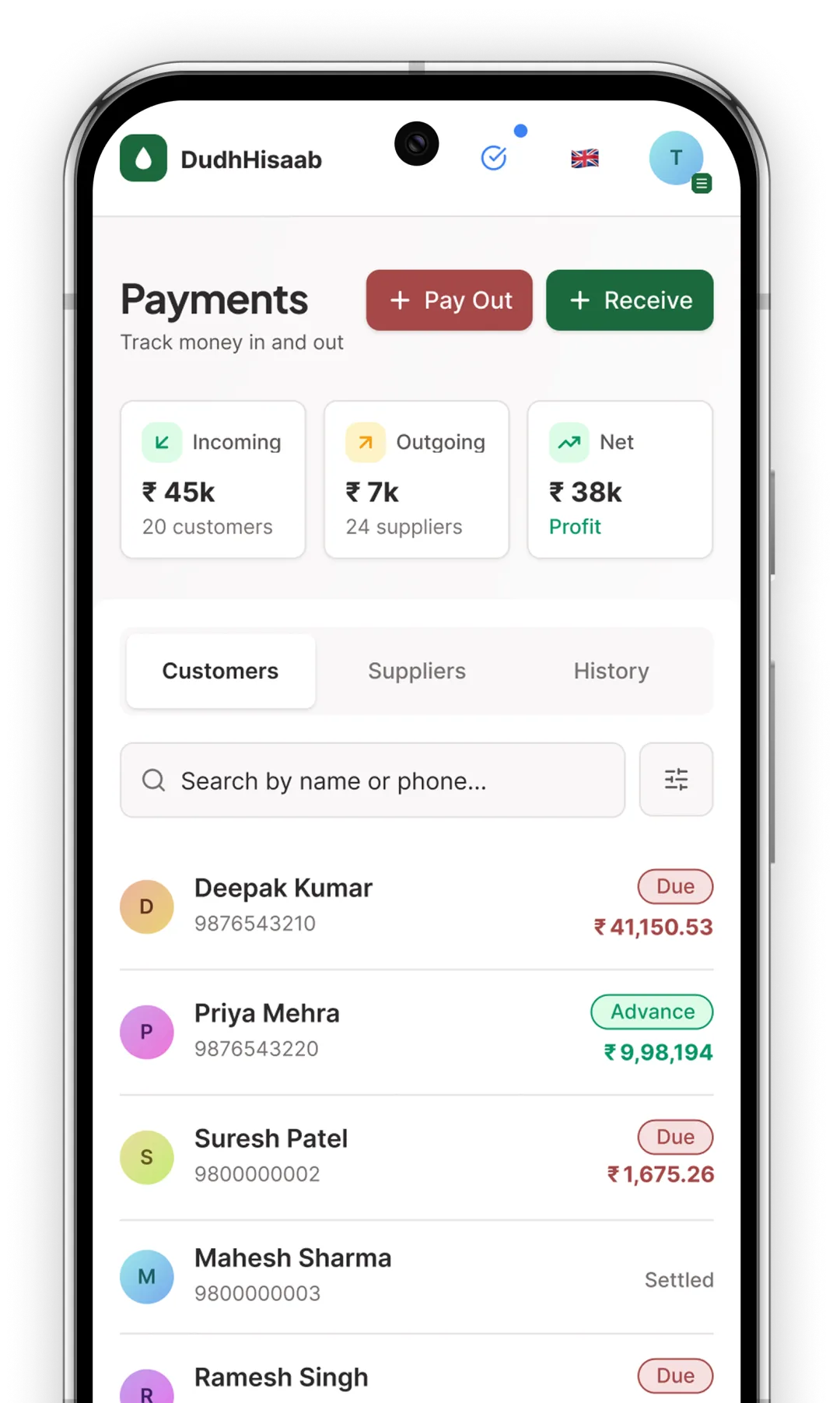
Dudh Hisaab में यह सब खुद-ब-खुद होता है — हर एंट्री में समय और तारीख, गणित अपने आप, पेमेंट ट्रैकिंग बिल्ट-इन। CA को देना हो या टैक्स फाइल करनी हो — रिपोर्ट तैयार है।
दूधवाले अक्सर कौन सी गलतियाँ करते हैं
- FSSAI नहीं करवाना — ₹100 में होती है, जरूरी है। छोड़ा तो जुर्माना भारी पड़ेगा।
- घर और धंधे के पैसे एक साथ रखना — डेयरी का अलग खाता खुलवाएं।
- ब्रांडेड प्रोडक्ट बेचना शुरू करने के बाद टर्नओवर नहीं देखना — पैकेज्ड घी या पनीर बेचते हैं? तो हिसाब रखें।
- रिकॉर्ड ना रखना — छूट वाले धंधे में भी रिकॉर्ड रखना होता है। Dudh Hisaab जैसे ऐप का डिजिटल रिकॉर्ड कानूनी तौर पर मान्य है।
- ITR न भरना — अगर टैक्स शून्य भी है, ITR भरने से भविष्य में लोन लेने में आसानी होती है।
कुल मिलाकर
जो दूधवाले घर-घर ताजा दूध पहुंचाते हैं — उनके लिए GST की कोई चिंता नहीं, दूध वैसे भी छूट में है। लेकिन जैसे-जैसे आप बढ़ते हो और प्रोसेस्ड चीजें जोड़ते हो, तब ये दरें समझना जरूरी हो जाता है। FSSAI करवा लो (₹100/साल), हिसाब डिजिटल रखो, और साल में ITR भर दो।
अपना डेयरी हिसाब डिजिटली संभालना शुरू करें — हमेशा के लिए मुफ्त.