
Most dairy apps don't survive a week on a real dairy owner's phone.
The reasons are predictable. The UI is too tech-heavy. It needs Wi-Fi. It only does collection or only does delivery — never both. Hindi is half-translated. The PDF statements look like spreadsheet screenshots. The customer takes one look at it and says "bhaiya, woh purana wala parchi hi achcha tha."
We installed DudhHisaab App a few weeks ago expecting the same outcome. Instead, we ended up moving an entire 60-supplier, 90-customer test dairy onto it. It survived. More than that — the people running the dairy didn't want to go back.
This review is the long version of why. If you want our shorter takes, see our Top 3 best dairy apps, Top 4 milk business apps, or the Top 5 buyer's guide. This piece is the deep-dive: every screen, every workflow, every catch.
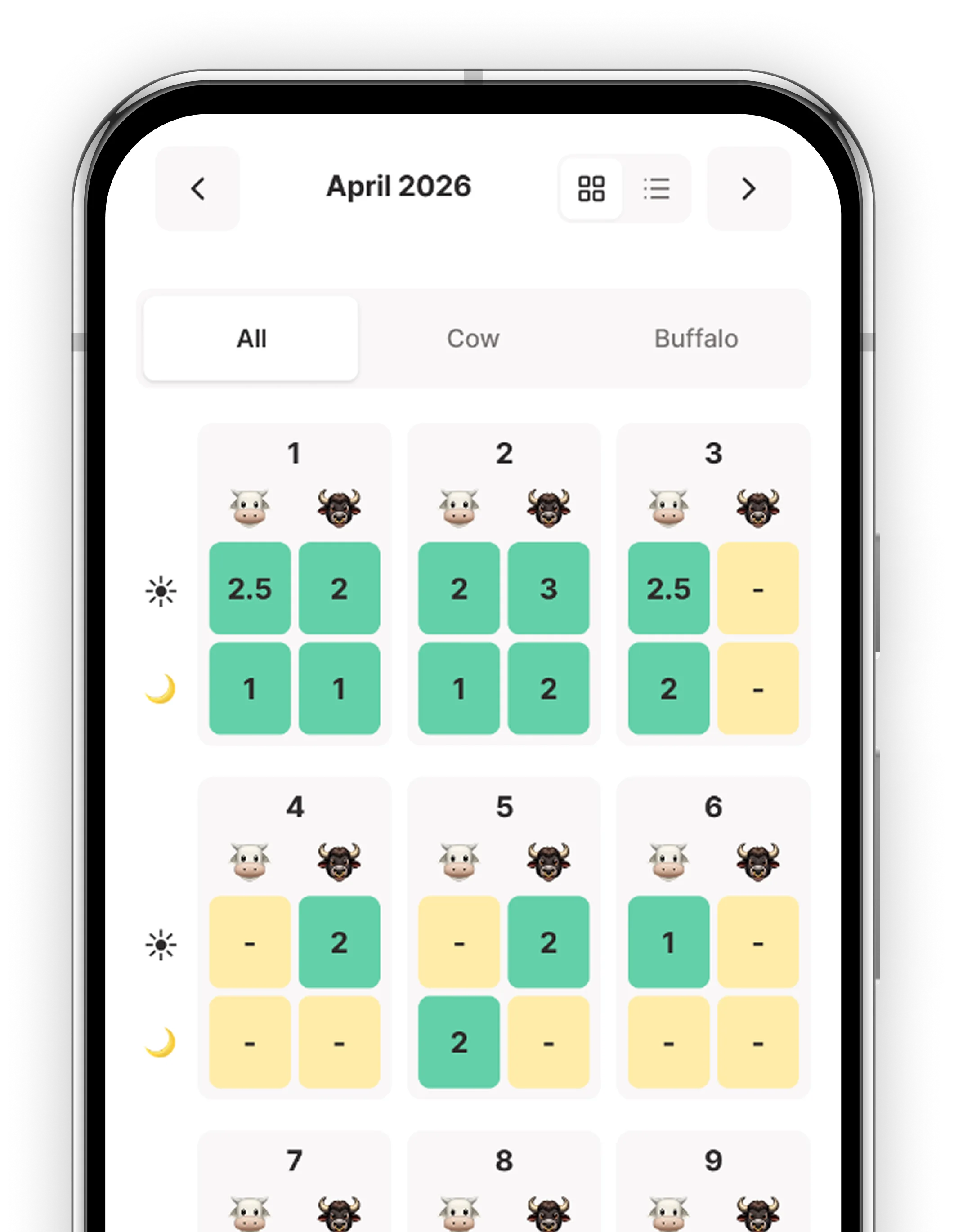
What is DudhHisaab, in one paragraph
DudhHisaab is a milk-business management app built specifically for the Indian dairy reality — where the same operator buys milk from a few dozen farmers in the morning and sells it to a few dozen homes in the evening. It runs on any phone (PWA, so iPhone, Android, low-end devices all work), works fully offline, supports Hindi and English natively, and generates branded PDF statements for both sides of the business.
That's the elevator pitch. Now the real review.
First impression: the dashboard
Open the app and the first thing you see is a single-screen dashboard. Today's collection, today's delivery, money owed, money pending. No menus to dig through, no hamburger of doom. Everything you'd ask a dairy owner at 7 PM is answered in one glance.
What we noticed:
- The numbers are live. Add a supplier entry, the dashboard updates instantly. No "pull to refresh", no spinning loaders.
- Hindi is one tap away. Switch language in the corner — every label flips. Customer names stay as you saved them; the rest is bilingual.
This sounds small. It isn't. Most "Hindi-supported" apps half-translate — buttons are Hindi, error messages are English. DudhHisaab doesn't cut that corner.
Suppliers: where most other apps fall apart
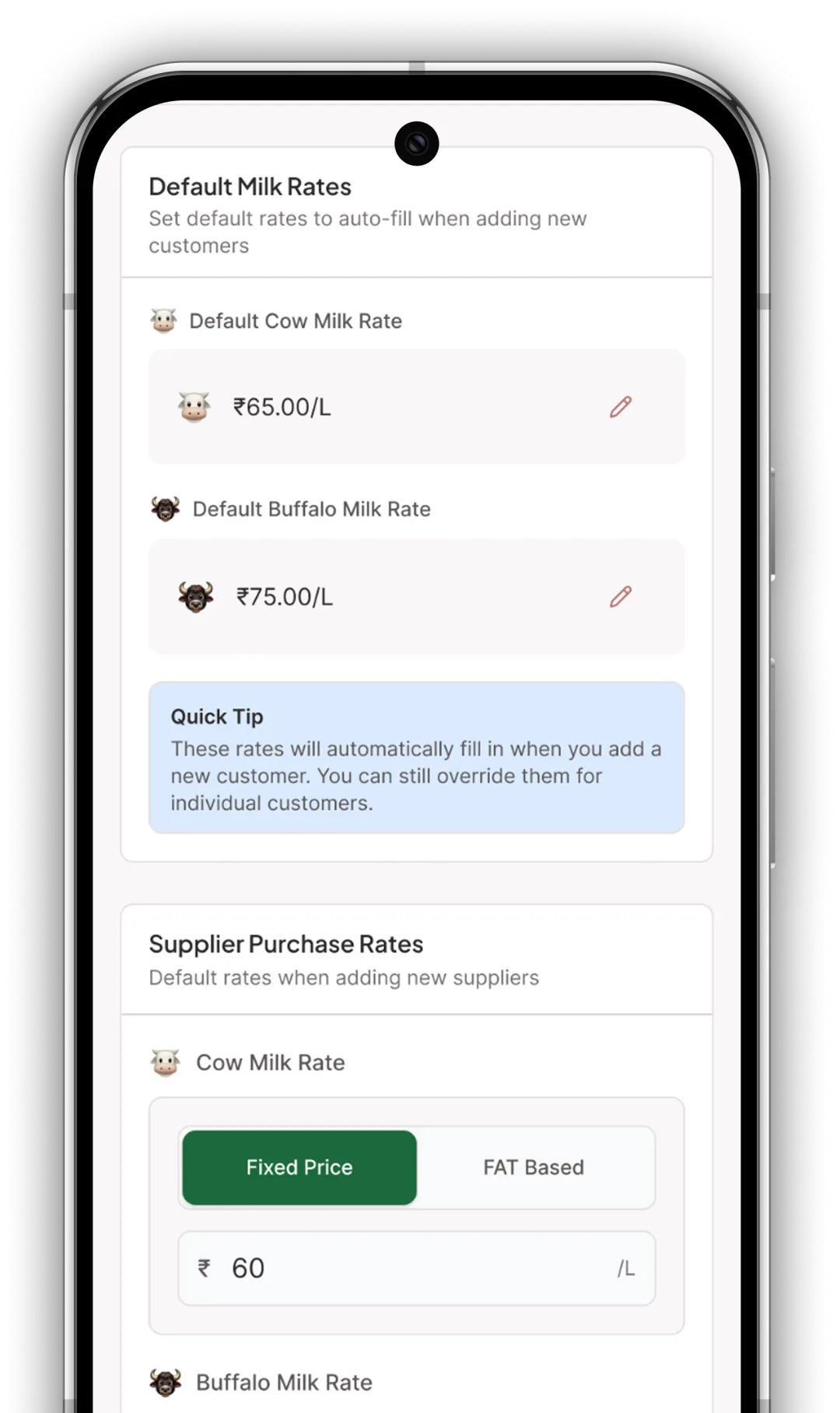
This is the part of running a dairy that no other app on the Play Store handles well. Suppliers — the farmers you buy milk from — are not customers. They have:
- Different pricing models (per-litre fixed, OR per-litre that varies by FAT content)
- Different payment cycles (often monthly, often partial advances)
- Different milk types (cow, buffalo, mixed)
- Different trust levels (you advance money to some, never to others)
DudhHisaab handles all of this with two pricing modes per supplier:
- Fixed rate — ₹X per litre for cow, ₹Y per litre for buffalo. Type the litres, done.
- FAT-based — set a base rate per FAT point (e.g. ₹6 per FAT %), and every entry calculates the litre rate from the FAT reading you enter (or photograph from the analyser).
The clever bit: FAT-based pricing has a per-supplier override. Some farmers get a slightly higher base, some lower, depending on relationship and quality. The app remembers all of it.
We logged 60 suppliers across two weeks of mock entries. Zero rate calculation errors. Compare that to a notebook, where one wrong column adds up to ₹400 of disputes by month-end.
Photo OCR for analyser slips
This deserves its own callout. If you're running FAT-based pricing, you're using a milk analyser. Those analysers display FAT/SNF/CLR/Water on a small screen. DudhHisaab lets you point your phone camera at the screen, and it reads the values automatically — no typing.
In practice this saves about 4 seconds per pour. Across 60 farmers twice a day, that's 8 minutes saved daily, plus a much lower error rate.
Customers: simple, on purpose
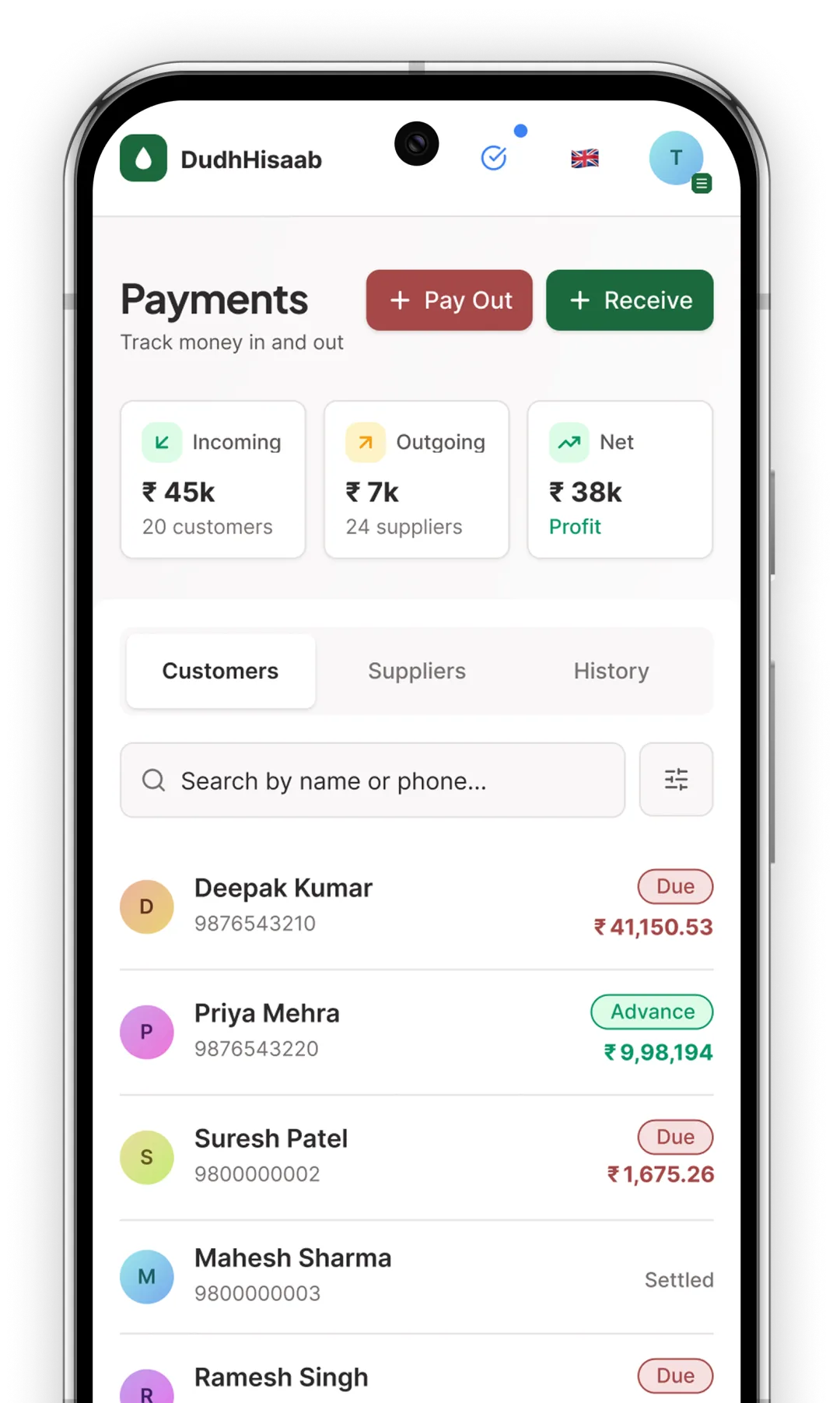
The customer side is deliberately simpler. Households don't want pricing complexity. They want one rate per litre for cow, one for buffalo, and a clean monthly bill.
DudhHisaab doesn't try to be clever here. It gives you:
- One fixed rate per milk type, per customer (with overrides per customer if needed).
- Quick daily entry — open the customer, tap litres, done in under 5 seconds.
- A WhatsApp-shareable daily slip PDF if the customer wants one.
- A monthly statement PDF showing every day's delivery, all payments made, balance carried forward.
This part is genuinely faster than the notebook. The customer-side daily entry is one of the most polished flows we've seen in any Indian small-business app.
Payments and PDFs: the part customers see
A milk app is judged not by how it looks to you, but by what your customers see. DudhHisaab's PDFs are the best in the category.
What you can generate:
- Daily slips — customer takes 2 L cow milk today, gets a clean PDF instantly with date, litres, rate, amount.
- Monthly customer statements — branded with your dairy name, every day's entry, payments deducted, opening and closing balance.
- Supplier statements — same idea, for the farmers you buy from. They love getting these, especially with FAT readings printed.
- Payment receipts — for any cash/UPI received against a bill.
- Reconciliation reports — month-end summary across all suppliers + customers, useful for taxes.
These aren't screenshots-renamed-as-PDF. They're proper A4-formatted, header-and-footer documents. You can print them, WhatsApp them, or attach to email. Customer trust goes up the moment they get the first one.
Offline mode: the unsung hero
We took the app to a basement parking, switched off Wi-Fi and mobile data, and logged 30 entries. All saved. Came back upstairs, signal returned, every entry synced silently in the background. Nothing lost.
This isn't a small thing. Indian dairies operate in semi-rural and basement environments where signal is unreliable. Most "online" apps lose data the moment a request times out. DudhHisaab queues writes locally and reconciles when it can.
Languages: Hindi and English, both first-class
This deserves a callout. We tested both languages exhaustively:
- Every button and label is translated.
- Error messages are translated.
- Notification text is translated.
- Generated PDFs respect the active language.
- Numbers and dates use Indian conventions (₹, Rs, DD/MM/YYYY).
If your dairy operator speaks Hindi and your customers want bills in English, you can serve both from the same app without any setup gymnastics.
What it's like to actually use, day-to-day
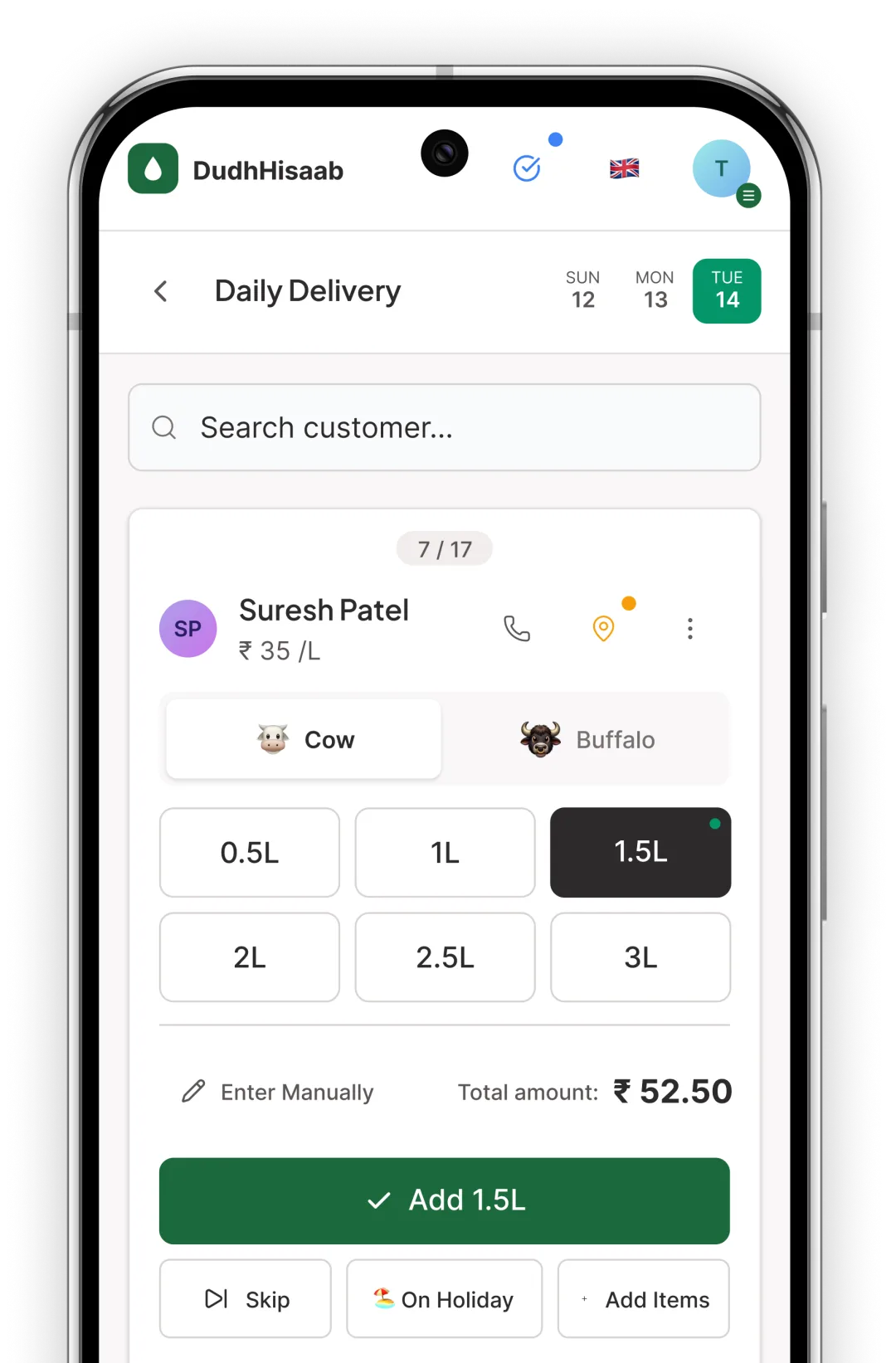
The morning collection round on DudhHisaab takes the same physical time as a notebook (you still have to weigh and pour) but cuts the after-round work to almost nothing. No re-entering anything later. No reconciling at month-end.
The evening delivery round is even faster than a notebook because customer rates are pre-filled — you only enter litres.
Month-end is the killer feature. What used to take an evening of calculating per supplier and per customer is now: tap "Generate statements" → all PDFs ready → WhatsApp them out. One operator told us this used to take her four hours every month-end. With the app, twenty minutes.
Where it could improve
We're not here to write a press release. Three honest gripes:
- Native milk-analyser Bluetooth integration — Liter has this; DudhHisaab uses photo OCR instead. OCR works well, but a direct Bluetooth pipe would be even faster.
- Bluetooth thermal printer support — for collection centres that print pour-by-pour slips. Currently slips are PDFs.
- Custom rate slabs by date range — useful for dairies that change cow milk rates seasonally. There's a workaround, but a cleaner UI for this would help.
The team has been transparent about all three being on the roadmap.
Pricing
Free for the first month — full feature access, no card needed. After that, a monthly subscription scaled to dairy size. The pricing is genuinely accessible — we did the math against the notebook losses (forgotten entries, rate disputes, month-end errors) and the app pays for itself inside a fortnight.
No ads. No "freemium with locked features." No nag screens.
Comparison: how it stacks up against the rest
Here's what the other big players in the Indian milk-management space look like in practice:
| Liter | HD Milk Collection | Milkolect | Nithra |
|---|---|---|---|
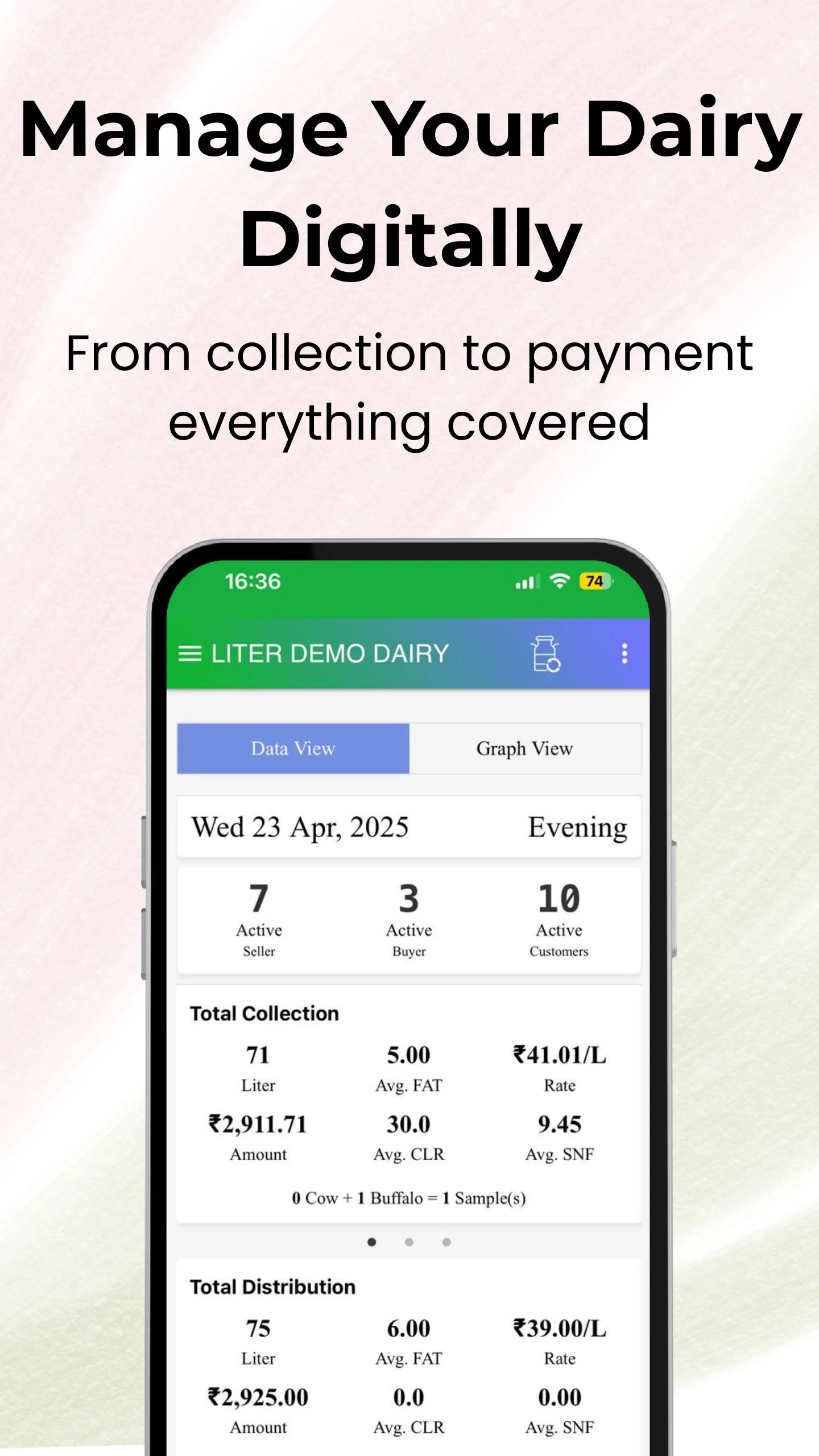 | 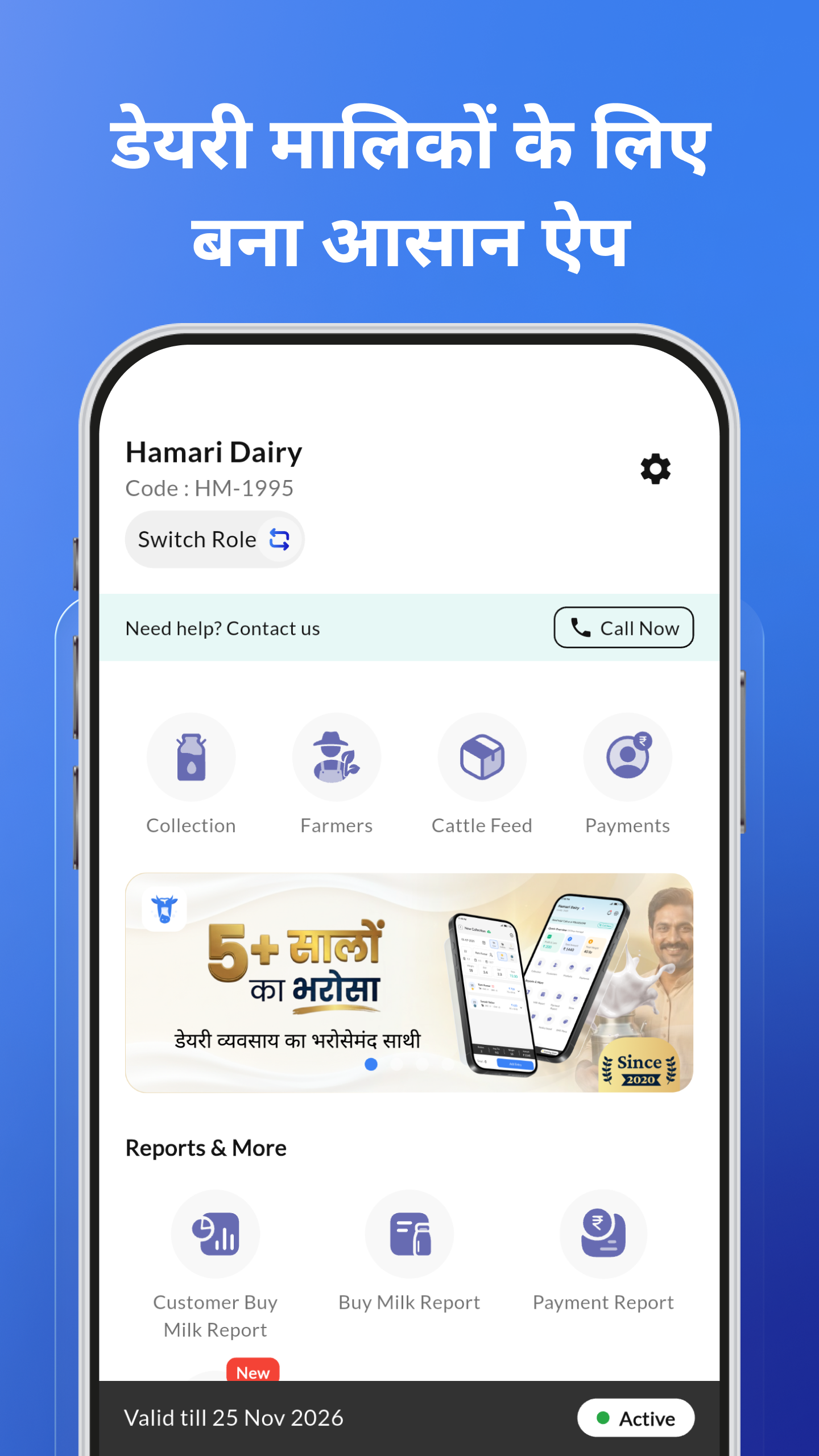 | 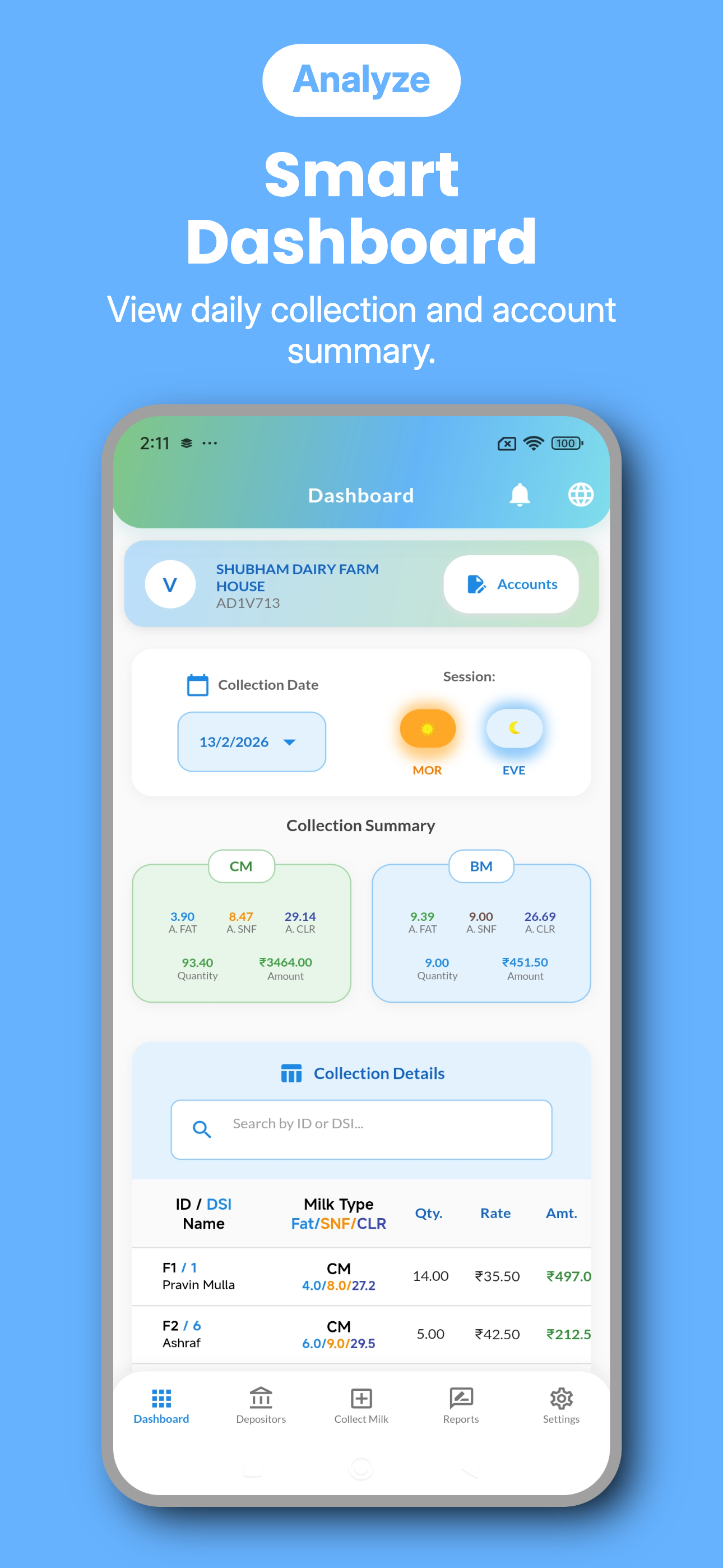 | 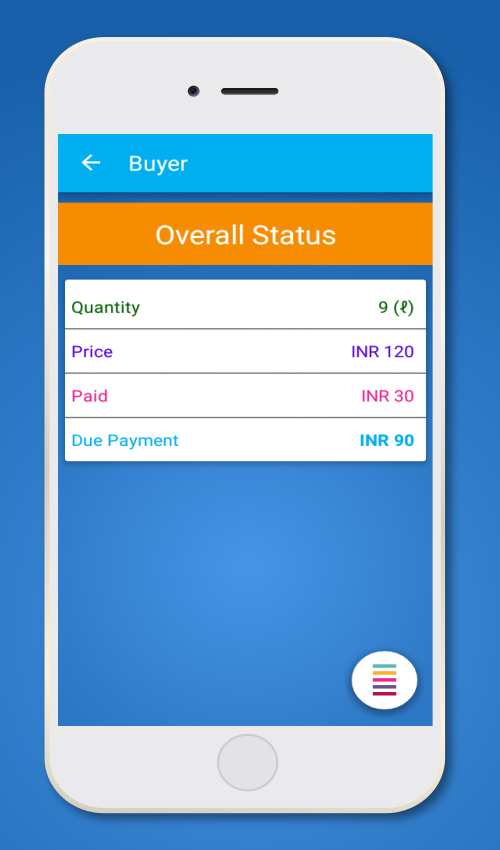 |
| Loopsys Tech | Hamari Dairy | SG World | Nithra |
| DudhHisaab | Liter | Hamari Dairy | Nithra | |
|---|---|---|---|---|
| Suppliers + customers | ✅ | ❌ | Partial | One ledger |
| FAT-based pricing | ✅ | ✅ (analyser) | Limited | ❌ |
| PDF statements | ✅ Branded | Slip-only | Basic | Basic |
| Offline | ✅ | ✅ | ✅ | Partial |
| Hindi + English | ✅ Full | English-leaning | English-leaning | Multi-lingual |
| iPhone | ✅ (PWA) | ❌ | ❌ | ❌ |
| Ads | ❌ | ❌ | ❌ | ✅ |
| Hardware required | None | Analyser + printer | None | None |
We covered each of those competitor apps in detail in our Top 3 dairy apps, Top 4 milk business apps and Top 5 buyer's guide posts.
Verdict
After two weeks of real-dairy use, DudhHisaab is the first milk management app we'd recommend without hesitation to any Indian dairy owner running both supplier and customer sides. It's also the one we'd recommend to anyone moving off a notebook for the first time — because the on-ramp is gentle and the wins show up in week one.
It's not perfect — the analyser Bluetooth and thermal printer gaps are real for collection-centre power users. But for the 80% of Indian dairies that look like "buy in the morning, sell in the evening, give bills at month-end", DudhHisaab is the most thought-through tool on the market today.
Try it: dudhhisaab.com
Official Play Store links
- DudhHisaab — Get it on Google Play · free to start, runs on Android + iPhone
- Liter Milk Collection Software — Get it on Google Play · Loopsys Technologies, Android, hardware-backed collection
- HD Milk Collection App (Hamari Dairy) — Get it on Google Play · subscription ERP, 1-month free trial, Android
- Milkolect — Get it on Google Play · SG World, Bluetooth analyser + thermal print, Android
- Nithra Milk Management — Get it on Google Play · free, ad-supported, Android (live since 2017)
Every feature we credit to DudhHisaab above lives in the free app — the daily khata, FAT/SNF rates, WhatsApp bills, payment reminders and Google Drive backup. Install DudhHisaab free →
Related reading
- Best Apps for Dairy & Milk Management in India (Top 3 Picks for 2026)
- Top 4 Apps to Run Your Milk Business Without a Single Notebook
- 5 Milk Management Apps Every Indian Dairy Owner Should Know in 2026
- DudhHisaab vs Everyone — full showdown vs all 4 competitors
- DudhHisaab vs Liter
- DudhHisaab vs Nithra Milk Management
- DudhHisaab vs HD Milk Collection (Hamari Dairy)
- DudhHisaab vs Milkolect
Reviewed: May 2026. We update this review every time DudhHisaab ships a major version.